
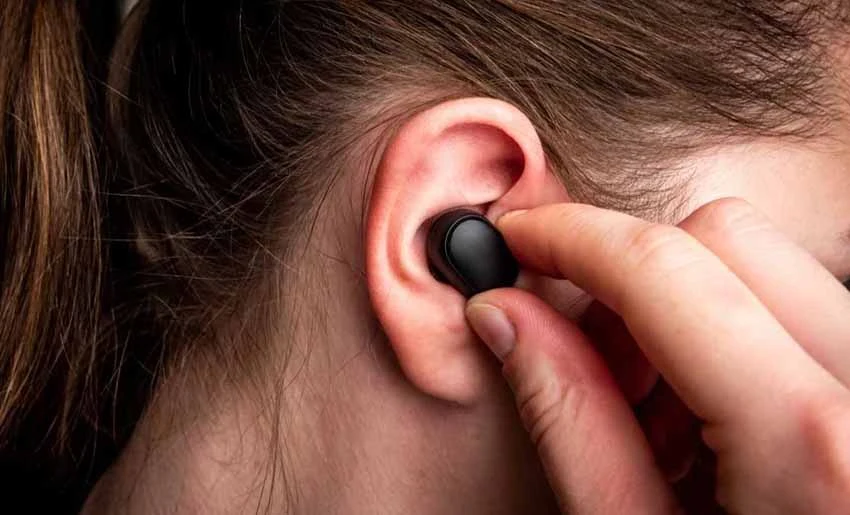
A claim has gone viral on social media lately, comparing prolonged use of Bluetooth headphones to “putting a microwave on your head.”
The concern arises because these devices use radio frequency to transmit information wirelessly and remain very close to the head during use.
However, exposure depends on the device’s power. A study that measured real-world situations found that Bluetooth headphones produced exposure levels. Between 10 and 400 times lower than mobile phones placed next to the ear.
This means they are not equivalent to a microwave. Whose power and operation are completely different. The World Health Organization continues to evaluate the potential effects of exposure to radiofrequency fields. It notes that there are still areas that require research.
Also the available reviews also do not support the claim that Bluetooth devices cause brain damage through regular use. In fact, an experimental study with Bluetooth headphones found no short-term effects on auditory nerve activity under the analyzed conditions.
Is this theory alarmist? The truth about radiofrequency exposure is not definitively settled. But it does put the alarmist comparison in the image into context.
For now, the available evidence does not support the idea that using Bluetooth headphones is like placing a microwave on your head. Research continues to better understand the effects of prolonged exposure and new wireless technologies.
In any case, I remember, during a visit to the Hearing Clinic in the city of Holguin. Being advised to use headphones as little as possible to protect my hearing. However, there’s none so deaf as those who will not hear.
Excessive headphone use can cause not only hearing damage but also other problems such as infections. Specifically, Manuel Mozota, head of the Otolaryngology Working Group of the Spanish Society of General Practitioners and Family Physicians (SEMG). He emphasizes that excessive headphone use can damage hearing through two processes.
“One of them is the acoustic trauma caused by sound waves striking the eardrum and overstimulating the auditory nerve. This depends primarily on the intensity and duration of the stimulus,” explains the specialist.
The other mechanism Núñez refers to is due to the friction of the earbuds, lack of ventilation, or accumulated dirt. Poor ventilation can lead to excessive moisture, sometimes resulting in fungal infections. Likewise, the lack of hygiene (absence of germs) can be responsible for bacterial infections.
In the case of mycosis (fungal infection), it can occur when several factors coincide. As Faustino Núñez Batalla, president of the Audiology Commission of the Spanish Society of Otolaryngology and Head and Neck Surgery (SEORL), explains:
-Prolonged use of headphones (more than one hour a day).
-Hot weather.
-Moisture in the ear canals (for example, after showering or swimming).
-Use of headphones by someone with mycosis.
What is the recommended headphone usage time?
Volume and exposure time are the key factors that determine hearing damage. In this regard, Núñez mentions the “rule of 60”: “Headphones at high sound levels are associated with hearing loss when the volume is above 60 percent for more than 60 minutes a day.”
Mozota adds that it’s important to consider the quality of the devices we use. Also whether they are inserted into the ear canal or, conversely, are not inserted and have padding. The latter are the most recommended because they isolate the ear from external noise and prevent the volume from being turned up more than necessary. In contrast, earbuds are the closest to the eardrum, increasing sound pressure and the risk of hearing damage.

- Friendship is a soul that inhabits two bodies - 14 de October de 2026
- The Phobia of Tuesday 13th: Religion, History, and Tradition - 13 de October de 2026
- Time Will Determine Where We End Up - 29 de September de 2026