
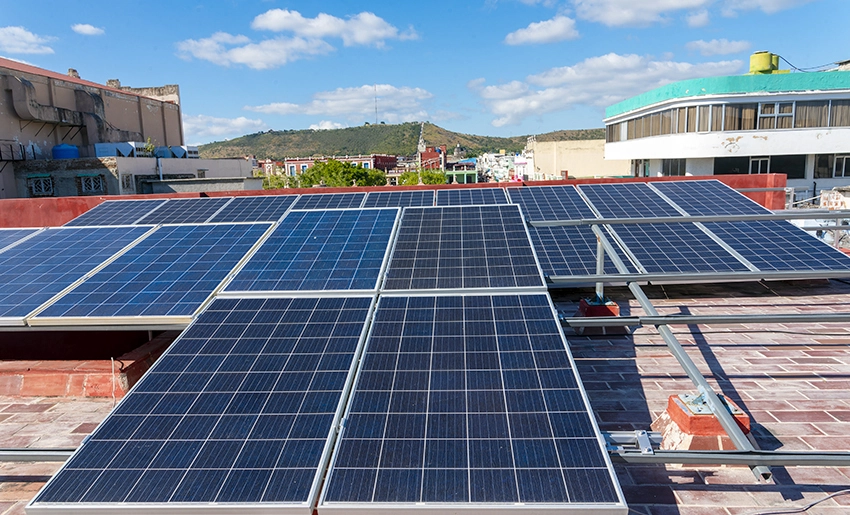
Holguin, a land of sun and wind, is witnessing a silent but visible transformation: the proliferation of photovoltaic panels on the roofs of our homes.
Given the complex energy situation the country is facing. The commitment to renewable sources is not only a state policy, but a lifeline for Cuban households.
However, in recent days, rumors and misinformation have circulated more strongly than the electrical current itself. Generating a common question: Is it mandatory to request permission to install solar panels?
The answer, rather than a simple “yes” or “no,” requires a thoughtful analysis of the necessary balance between promoting clean energy and land-use planning.
It is imperative to clarify, for the peace of mind of Holguin families, that there is no prohibition nor a general permit required simply for choosing solar energy. The Cuban state, in its energy transition strategy. It has facilitated the importation of these systems and eliminated tariffs. Recognizing the residential sector as a strategic ally.
However, confusion arises where the freedom to install solar panels ends and construction responsibility begins. A recent meeting between the National Institute of Territorial Planning (INOTU). The National Office for Energy Regulation (ONURE), and the Electric Company in the province of Holguin has shed light on the nuances that citizens should be aware of:
Areas of special attention: A permit or license is strictly necessary in homes located in historic districts (where public spaces must be preserved). In multi-family buildings, due to the shared use of common areas.
Structural Safety: In urban areas, the installation of solar panels on roofs legally constitutes a structural modification. This is where the Construction Authorization (under Decree-Law 322/2014) becomes relevant. This isn’t a “sun tax,” but rather a measure to ensure that a home’s roof—often years old—can withstand the weight. Above all, the force of the winds during hydrometeorological events.
The most commendable aspect of the current government approach is its preventative, rather than punitive, nature. Authorities have been emphatic: there will be no fines or penalties for those who already have their systems installed. The goal is to provide technical guidance.
“The approach is one of explanation and promotion to encourage the continued adoption of photovoltaic energy,” say sources in the sector. It’s an outstretched hand to rectify installation problems. Ultimately, protect the homeowner’s investment and the physical safety of their neighbors.
Despite these clarifications, a communication challenge remains. While some municipal departments require specific documentation. Such as structural resistance certifications and technical plans. Public perception oscillates between misinformation and fear of bureaucracy.
For the popular investment process to flow smoothly. Unified and accessible information is required. Fragmented criteria across different regions only fuel uncertainty.
Citizens need to know that the procedure (which in many cases costs as little as 68 pesos). It guarantees that their system will have the necessary grounding against lightning strikes. And the electrical protections that will prevent major damage to the home’s electrical system.
Installing a solar panel is not just placing a piece of glass in the sun. It’s integrating a power generation system into a living structure. In a province like Holguin, with high solar potential, regulations should not be seen as a hindrance. As the foundation for secure energy sovereignty.
The recommendation for those planning to join this green wave is to exercise caution: seek advice from the Municipal Directorate of Territorial Planning and Urban Development before drilling into your roof.
The sun is free, but the safety of our homes is a shared responsibility. Let’s not allow the light we seek today to be tarnished by a miscalculation or a legal oversight.
By: Daimy Peña Guillén

- Social transformations analyzed during meeting with Minister of Labor in Holguin - 9 de October de 2026
- Tradition and Color at Iberoart Fair in Holguin - 9 de October de 2026
- Japanese delegation inspects startup of Caletones desalination plant - 9 de October de 2026