
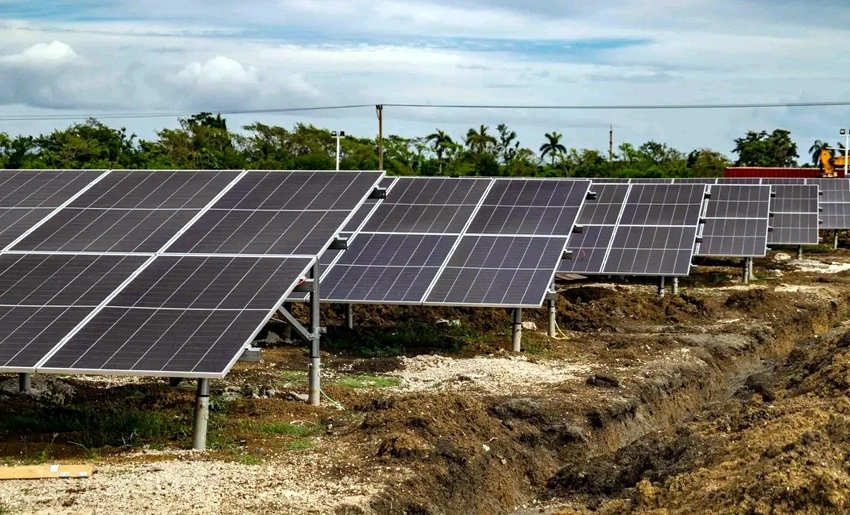
The municipality of Mayari is consolidating its position as a leader in renewable energy generation. With the construction of the Serones I photovoltaic solar park, which is in its final phase. The project, which will contribute five megawatts (MW) to the National Electric System (SEN). It will incorporate a battery storage system for the first time in the area. Representing a significant leap forward in service stability.
In a context where the nation is intensifying its efforts to transform the energy matrix. Holguin is emerging as one of the leading provinces in this endeavor. Located just a few kilometers from the already operational Serones II park. So the new project, being carried out by the Hydraulic Works Construction Company, is showing rapid progress. To date, 174 solar panel arrays have been installed. An advance that will allow the first inverter to be activated next April. While the assembly of the second half of the structure continues.
One of the distinguishing features of Serones I is its energy storage capacity. In addition to its five megawatts of generation capacity, the facility will have one megawatt (MW) of battery storage. A technology that allows the energy generated during the day to be conserved for use during peak demand hours. Also thus contributing to the stability of the electrical service. This technological solution aligns with the national strategy to make the system more efficient and resilient to contingencies.
Contractor Luis Manuel Guerrero Díaz emphasized that, despite lacking prior experience in the construction of photovoltaic farms. The formation of skilled teams and collaboration between agencies have been key to maintaining the project schedule.
The construction of these parks in Holguin has presented a significant logistical challenge. Also where the innovation and dedication of the more than 260 workers involved have been paramount in overcoming limitations.
Serones I is part of a donation from the People’s Republic of China that includes 85 MW across the country. Of this total, 40 MW correspond to the province of Holguin. Distributed across various power generation parks. This project complements the Serones II park, also located in Mayari. Which was connected to the grid in October 2025, becoming the first of the seven sites donated by the Asian nation to become operational.
In the last 12 months, Cuba has tripled its solar power generation capacity. Increasing its share from 5.8% to over 20% of total generation. Connecting 49 new parks to the national grid in just over a year. Each megawatt installed represents an approximate savings of 18,000 tons of imported fuel annually. Easing the pressure on the national economy.
The commissioning of these facilities not only strengthens the development of renewable energy sources in the region. So it is also a fundamental pillar in the country’s strategy to achieve energy sovereignty. In Holguin, this momentum is complemented by recent regulations that facilitate the entry of new players.
An instruction manual from the Holguin Electric Company regulates interconnection to the National Electric System (SEN). Encouraging state entities, micro, small, and medium-sized enterprises (MSMEs). And the general population to produce their own surplus energy.
The Holguin Fishing Company is an example of this transformation. As it has been operating a solar panel system since the beginning of the year. Allowing it to reduce its consumption by 15%. Demonstrating that the energy matrix shift is a tangible reality in daily life. These efforts, along with projects like Serones I, lay the groundwork for the region to move toward greater energy independence. Reducing vulnerability to fuel shortages and contributing to environmental protection.
By: Daimy Peña Guillén

- Holguin Health Sector Strengthens Ties with Adolescents and Youth - 1 de October de 2026
- Trump’s measures against Cuba: another step toward strangulation - 1 de October de 2026
- Cuba prioritizes respect and care for older adults - 1 de October de 2026