There are dates in Cuba that were born marked by light. February 24th is one of them. But not only because of the independence uprisings of the 19th century, but because on this day in 1962. The fabric began to be woven that would prevent that other light. The one lit by the literacy workers in 1961, from being extinguished forever.
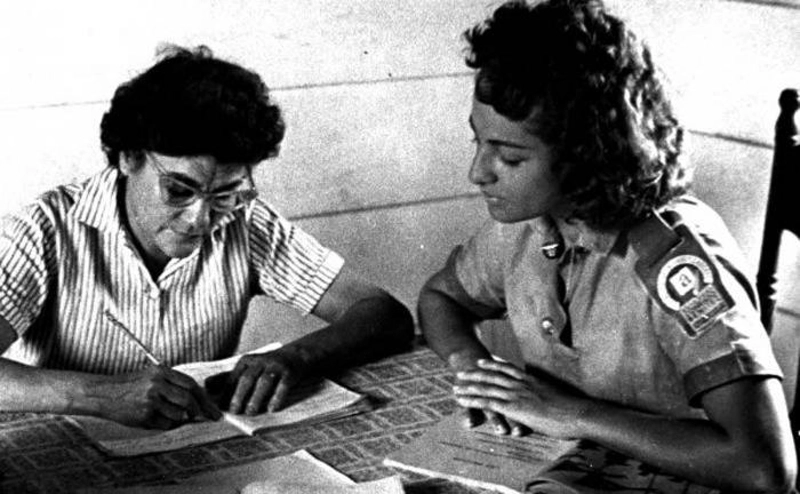
The Literacy Campaign ended, and the country was a giant school. But the challenge was different. What to do with that peasant who already knew how to sign his name and wanted to read a whole newspaper. With that domestic worker who had learned the vowels and now dreamed of reaching sixth grade. The Revolution asked itself that same question. And the answer came on February 24th, when Workers’ and Peasants’ Education (EOC) was born.
Also the objective was as clear as it was ambitious. To raise the educational level of all those who had been forgotten for centuries. From the workers, from the peasants. From those who lived in the city and also from those who lived deep in the countryside. No one could be left out.
And that is how this educational subsystem, now 64 years old, began to write its own history. One that rarely appears in the headlines but is made up of small, everyday victories.
Over time, the old EOC (Educational and Cultural Center) transformed into what we know today as Youth and Adult Education. But its wandering spirit did not change. On the contrary, it multiplied. When the Revolution looked to other nations of the world and said, “Let’s share what we have.” It was many of its teachers who packed books and blackboards to teach literacy. When Cuba needed to push those who were lagging behind. So there they were with the Battle for Sixth Grade and, later, with the Battle for Ninth.
Those who lived through those years say that the schools seemed like beehives at any time of day. Men and women of all ages arrived after the workday. With the same enthusiasm as a child on their first day of school. And behind each of those achievements lay a piece of this story.
In the early 1990s and early 2000s, when the Battle of Ideas called for leaving no one behind. Youth and Adult Education was strengthened once again. From its ranks emerged the Comprehensive Development Courses for Young People. Those that rescued young men and women who were adrift. It also took on the “Álvaro Reynoso” Project. So that farmworkers could grow without putting down their machetes.
But the scope of this subsystem has always been broader than it seems. Because it also reached where others did not. Prisons, bringing education to those serving sentences. Demonstrating that education can be the helping hand that rebuilds lives.
Because it prepared those who wanted to make the leap to university with preparatory courses for higher education. Because it taught languages to teachers who would later go on international missions. And because, in the poorest neighborhoods, it launched community courses for children, teenagers, and young adults. Who, for one reason or another, had fallen through the cracks of the regular education system.
This February 24th, while some focus on more visible anniversaries. Adult and Youth Education celebrates in silence. As those who truly work have always done.
Its greatness lies in the small things. In the gaze of someone who discovers they still have time. In the notebook of a worker who studies after work. Or in the humble classroom where someone overcomes their own challenges. As a reminder that in Cuba, knowledge knows no age.

- New Holguin schoolchildren join the OPJM (+ Photos) - 8 de October de 2026
- Innovating in Cuba: the talent that produces, saves, and solves - 7 de October de 2026
- Cuban Deputy Prime Minister Assesses Water Availability in Holguin - 2 de October de 2026