
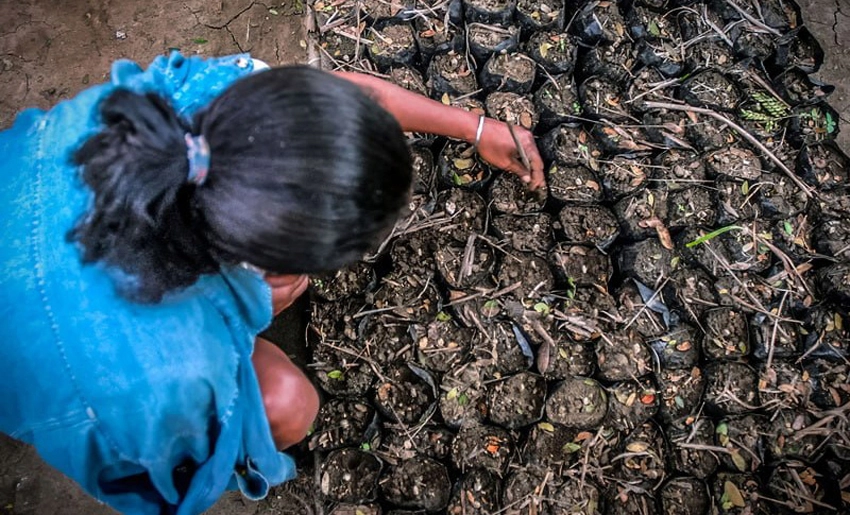
The province of Holguin is promoting the use of agroecological practices to replace artificial fertilizers and contribute to food sovereignty programs and the planting of resilient crops.
Juan Carlos González Leyva, a specialist from the Ministry of Science, Technology and Environment, emphasized to CNA that priority has been given to the production of worm humus and compost. Widely accepted natural fertilizers.
The official highlighted that municipalities such as Banes and Mayari have joined international collaboration projects. Aimed at improving soil productivity through more resilient techniques. Such as reducing the spacing between plants.
Also these initiatives have also reduced expenses. Since industrial fertilizers have high prices on the international market and their importation is limited by the tightening of the United States’ economic, commercial, and financial blockade against Cuba.
The expert noted that since 2021, more than 4,000 hectares have benefited from sustainable practices. Including the introduction of more efficient center-pivot irrigation systems.
Crop residues have also been utilized in humus production, and dried grape must has been used as nursery substrate. Especially in the mountainous region, he pointed out.
Agroecological practices are modified ways of managing the agricultural system based on local knowledge and inputs. Strengthening natural cycles and processes, with the option of reducing or eliminating the use of synthetic pesticides.
During the last five years, Holguin has promoted the development of these activities. One of the lines of work of Tarea Vida (Task Life), the Cuban State’s plan to address climate change. One of the sustainable growth objectives promoted by the United Nations Development Fund.
With information from CNA

- Holguin Health Sector Strengthens Ties with Adolescents and Youth - 1 de October de 2026
- Trump’s measures against Cuba: another step toward strangulation - 1 de October de 2026
- Cuba prioritizes respect and care for older adults - 1 de October de 2026