
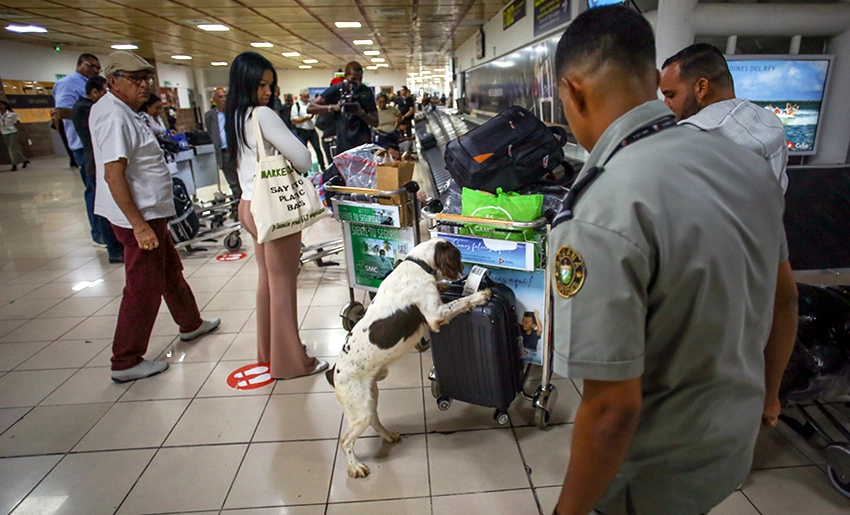
On Monday, the Official Gazette of the Republic of Cuba published—in its Ordinary Edition No. 83—new regulations allowing individuals to formally clear goods of a commercial nature through Customs via non-commercial channels. Upon payment of tariffs and customs service fees in US dollars (USD).
The new framework comprises Decree-Law 132/2026 (signed on August 19th) and two resolutions: Resolution 197/2026 from the Ministry of Finance and Prices, and Resolution 340/2026 from the General Customs of the Republic.
Decree-Law 132 amends Article 14 of Decree-Law 22 of 2020. The regulation maintains administrative confiscation for cases involving the importation of prohibited products, fraudulent declarations, or the exceeding of established quantity limits.
However, it establishes an alternative when Customs determines that limits have been exceeded or that the goods are of a commercial nature: the individual may formalize the importation through a new clearance process, paying the customs duty and corresponding fees in USD.
Progressive Tariffs for Travelers
Resolution 197/2026 establishes the tariffs travelers must pay. These will be progressive based on the value of goods exceeding the limits authorized for non-commercial importation.
A 15% tariff applies to values up to 2,000 USD; 20% on the amount exceeding that figure up to 4,000 USD; 25% between 4,000 and 6,000 USD; and 30% for amounts above 6,000 USD. A flat rate of 30% is established for goods imported via shipments.
Payment may be made using domestic or international cards in USD. Cash is accepted only at airports, through entities authorized for that purpose.
The resolution also sets maximum fees for customs services. These range from 2 USD for shipments valued up to 200 USD to 50 USD for goods valued at over 6,000 USD.
New rules for determining commercial nature
Resolution 340/2026 of the General Customs of the Republic establishes rules for non-commercial imports, incorporates reference values for various product categories. Also it defines criteria for determining when an import takes on a commercial character.
The regulation repeals Resolutions 175 of 2022, 170 of 2024, and 312 of 2026.
When Customs detects an excess quantity or determines that the goods are commercial in nature. It will first clear the items admissible as non-commercial imports.
If the owner agrees to proceed, a new clearance process will begin for the remaining goods. Subject to the payment of established tariffs and service fees in USD.
If the individual disagrees, they may request the re-export of the goods. If they neither make the corresponding payment nor opt for re-export, the appropriate administrative measure will be applied.
The resolution includes examples to illustrate the procedure. For instance, if a passenger attempts to import 90 kilograms of women’s shoes, five kilograms may be admitted as a non-commercial import. While the remainder will be subject to clearance in USD. In the case of five toilet bowls, three may be admitted via the non-commercial channel.
Up to five phones and three computers
The new regulation also establishes maximum quantities for specific items. Among other things, it permits the importation of up to five mobile phones and up to three pieces of computing equipment.
It also allows for the one-time importation of a fully electric car or SUV. These vehicles will be exempt from import duties when imported alongside a charging station powered by a renewable energy source.
Customs authorities may also deem an importation to be commercial in nature if there is a pattern of repeated entry of specific goods. In such cases, a sanctioning resolution will be issued. Potentially limiting the individual’s right to import goods for a specified period.
These three provisions will take effect seven days after their publication in the Official Gazette.
Decree-Law 132 further stipulates that the Minister of Justice must order the publication—within 30 days—of an updated version of Decree-Law 22 of 2020, incorporating the amendments established by the new regulation.
What changes with the new Cuban Customs regulations?
Can individuals import goods of a commercial nature?
Yes. Individuals may process goods through Customs that exceed non-commercial import limits or are considered commercial in nature. By completing the clearance process and paying tariffs in USD.
How much will the tariff be?
For travelers, the rates will be progressive: 15% on the first $2,000 USD; 20% on the excess amount up to $4,000; 25% up to $6,000; and 30% on amounts above that figure.
What about shipments?
Shipments will be subject to a 30% tariff.
How can payment be made?
Using domestic or international cards denominated in USD. Cash will only be accepted at airports and authorized facilities.
What happens if Customs detects an excess?
First, they will clear the items that qualify as non-commercial imports. The remainder can be processed through a separate clearance procedure, subject to the corresponding payment in USD.
Can this procedure be refused?
Yes. The owner may request the re-export (return shipment) of the goods. If they neither pay nor re-export the goods, the corresponding administrative measure will be applied.
How many phones and computers can be imported?
The new resolution establishes limits including, among other items, up to five mobile phones and three computing devices.
What happens if a person repeatedly imports goods of a commercial nature?
Customs may issue a sanctioning resolution temporarily limiting their right to import.
When do the new rules go into effect?
The three provisions will take effect seven days after their publication in Official Gazette No. 83.
With information from Cubadebate

- Cuba Authorizes Commercial Imports via Non-Commercial Channels for Individuals - 6 de October de 2026
- Lidis Lamorú to Perform Major Concert at Club Bariay - 6 de October de 2026
- Russia to Resume Air Links with Havana - 6 de October de 2026