
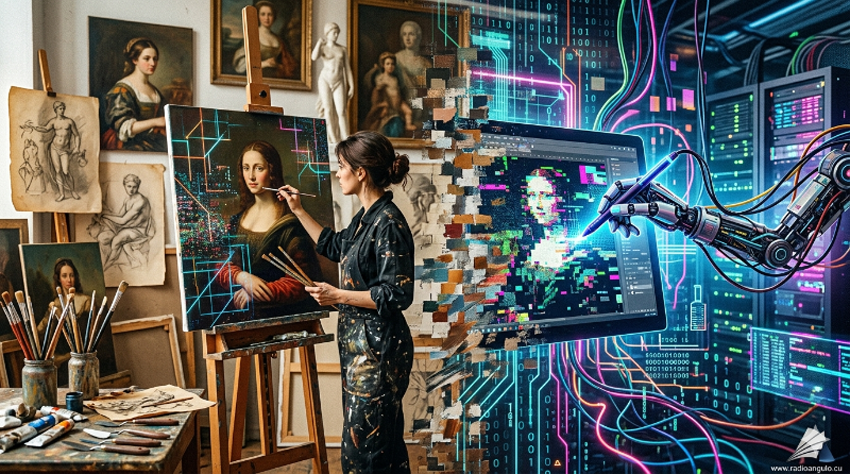
Since the dawn of humanity, art has been an essential manifestation of being human. A bridge between emotion and expression, a universal language that transcends cultures and eras. It arose from a need to tell stories, to give meaning to the world around us, and to connect with the transcendent. Cave paintings, sculptures, music, and dance have borne witness to human ingenuity and sensitivity throughout millennia.
Over time, art has evolved, adapting to social, cultural, and technological changes. The arrival of photography, film, and more recently, digital art, opens new dimensions of creation and perception. Today, in the midst of the digital age and with the rise of artificial intelligence (AI). The very concept of art seems to be at a crossroads.
Digital art has democratized access to and production of art. Allowing creators worldwide to experiment with new forms and techniques. However, this revolution also brings challenges. AI, capable of generating images, music, and texts with just a few commands. It raises questions about originality, authorship, and the value of human work. What happens when a machine can replicate styles or create works without direct human intervention? Where does the artist’s soul fit in?
In this context, artists face a dual task. Preserving the human and creative essence of art and adapting to an environment where technology amplifies but also challenges their role. Authenticity, critical thinking, and emotional depth become irreplaceable values in the face of automated mass production.
Furthermore, there is the threat of the dehumanization of art, when the artwork becomes a product of fast, disposable consumption. There is also the risk that excessive reliance on algorithms will limit cultural diversity and genuine innovation. Favoring pre-established models and stereotypes.
Art is not merely an aesthetic expression, but a reflection of our humanity, a space for reflection, critique, and hope. In the digital age, we must protect and value it for what it is. An irreplaceable vehicle for our identity and sensitivity.
The convergence of art, technology, and artificial intelligence opens unexpected doors. Also it demands ethical responsibility and a commitment to authentic creativity. Artists, critics, and audiences have the task of navigating this transformation without losing sight of art’s primary purpose: to move, question, and humanize.
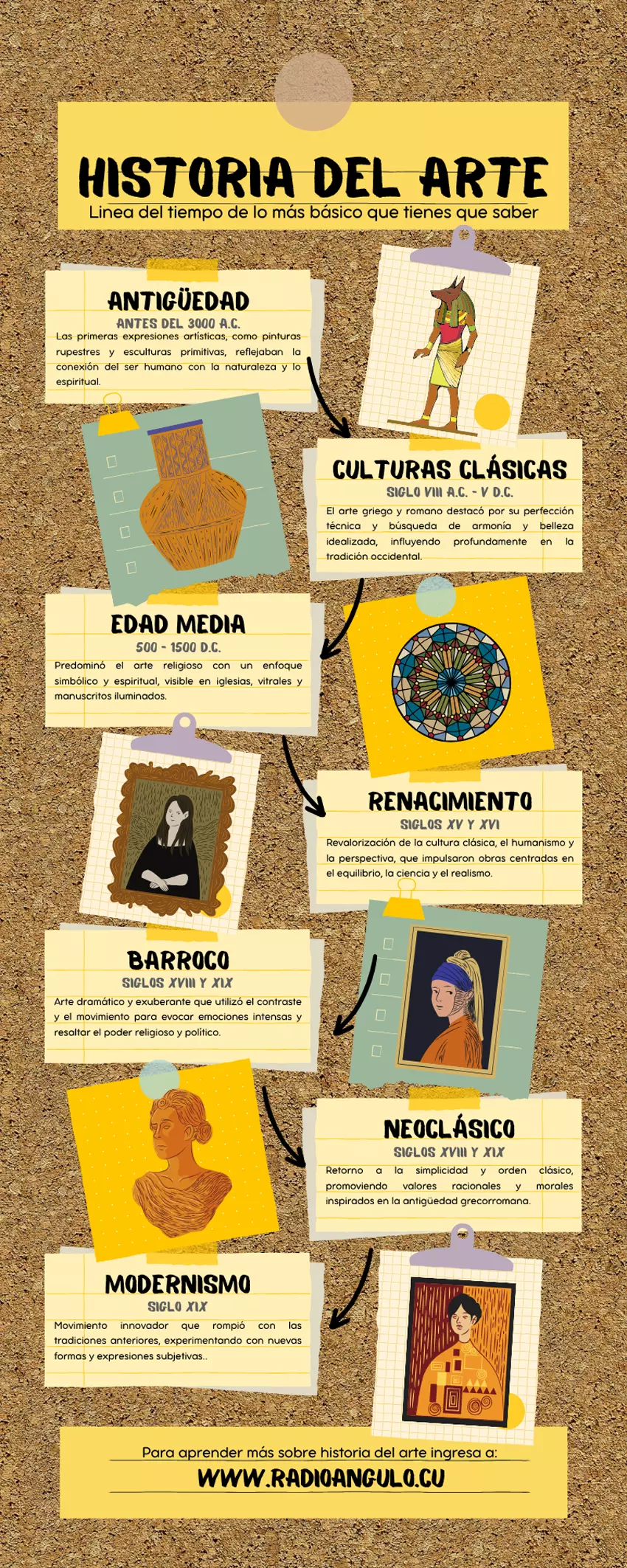
Infographic: Álvaro Suárez
By: Alvaro Raúl Suárez Leyva

- Art in the Digital Age: Between Tradition and Technological Risk - 26 de March de 2026
- China Reiterates Support for Cuba and Denounces US Sanctions - 25 de March de 2026
- Special School Improves Quality of Life for Autistic Children - 25 de March de 2026