
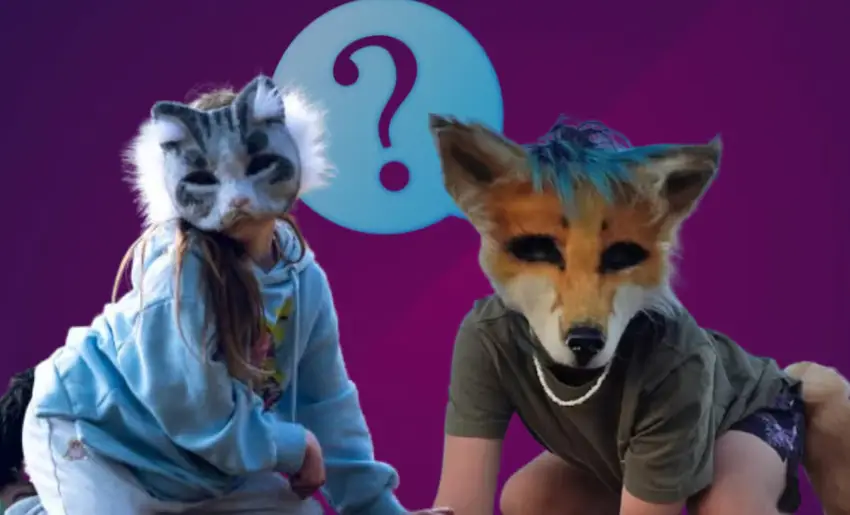
In recent weeks, a term foreign to everyday vocabulary has jumped. From mobile phone screens to headlines: therians. These are people, mostly teenagers. Who express a spiritual or psychological connection with an animal, which they call a “theritype.”
Although it may seem like an eccentricity born on TikTok, the movement has its roots in internet forums of the 1990s. However, what was once an intimate and discreet experience. It has now become a mass spectacle under the algorithm of social media.
This leap into the public eye has brought with it the visibility of quadrobics (the exercise of moving on all fours). And the use of homemade masks. But with fame also came summary judgment. Media figures and conservative sectors have been quick to label these young people. As “alienated” or to demand psychiatric treatment. Succumbing to a moral panic that does little to help understand the heart of the matter.
It is vital to clarify points about therians that the sensationalist press ignores.
* It is not a disorder: Clinical manuals such as the DSM-5 do not recognize this identification as a mental pathology per se.
* Difference from “furries“: Unlike furries, where the costume is an aesthetic or recreational hobby. For therians, the connection with the animal is perceived as an intrinsic part of their being.
* The trap of ridicule: Isolating a gesture—a howl or a mask—to ridicule it is a form of symbolic violence. That only generates greater isolation in the adolescent.
Reducing this phenomenon to “internet nonsense” is a superficial oversimplification. In the current geopolitical context. There is a tendency to instrumentalize these behaviors to attack social gains. By maliciously equating an adolescent search for identity with established rights. Such as gender identity—certain groups seek to delegitimize human diversity. Under the argument that “anything goes.”
The risk lies not in an adolescent identifying with a wolf, but in a society that prefers to pathologize rather than listen. Beyond the mask, the therian phenomenon is a symptom. Psychoanalysis suggests that behind these behaviors there is often underlying suffering. Or a difficulty fitting into increasingly fragmented and hostile social bonds.
We must ask ourselves: What refuge do these young people find in the non-human that they cannot find in our society? How does the pressure for “viral eccentricity” influence the construction of their personality? Are we offering spaces of genuine support in the face of the coldness of the algorithm?
Therians are not a public danger, but an uncomfortable mirror. If our only response is insult or marginalization. We will be failing in our responsibility to guide and understand new generations. Before judging the howl, it’s worth examining the silence to which we have condemned their anxieties.
By: Daimy Peña Guillén

- Minjus informs about the use of criminal records in Cuba and abroad - 6 de April de 2026
- Active Sedentary Lifestyle: A New Therapy Against Dementia - 6 de April de 2026
- The Antonio Guiteras Thermoelectric Power Plant is underway after its shutdown from the SEN - 6 de April de 2026