
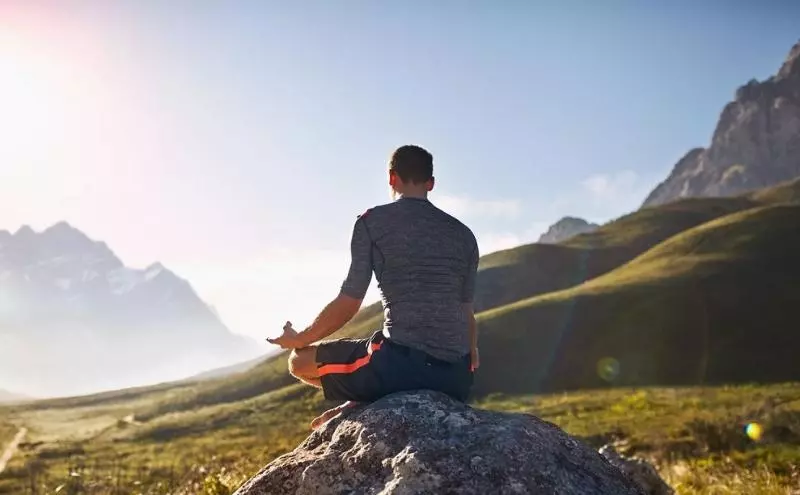
There are people who walk through life with a calmness that seems impossible, not because things don’t happen to them, not because they don’t have problems or wounds, but because they have learned something that few understand: peace doesn’t come when everything is in order, it comes when you are in order, when you finally stop fighting with what you cannot change.
When you decide to let go of the need to control everything, to always be right, or to please everyone. That’s how true tranquility begins. People who live in peace are no different from the rest. They feel, they get frustrated, they cry, they doubt. But there is something in their way of looking at the world that completely changes the experience.
Also they have learned to breathe more slowly, to not react immediately to every thought that crosses their mind, to understand that life, even in chaos, is still a gift. And of course, you don’t achieve that overnight; it’s the result of mental training, daily practice, thousands of moments where you choose serenity over drama, silence over reaction, understanding over judgment. Living in peace doesn’t mean feeling nothing. It means feeling everything without getting lost in it.
Well, the first change these people usually make is internal, not external. They begin to observe their thoughts as if they weren’t entirely their own. They watch them pass, they listen to them, but they don’t believe them all because they understand that the mind is a tireless storyteller, one that exaggerates, dramatizes, imagines dangers, and fabricates futures that almost never arrive. And they learn to say, “This is just a thought, not reality.” That simple phrase has transformative power because as soon as you distinguish between what you think and what truly is, you regain control of your life. Then they learn something even more difficult: acceptance.
Accepting that people change, that plans fall apart, that pain arrives without warning, accepting that life doesn’t ask permission, and even though it hurts, even though it sometimes seems unfair, acceptance becomes the greatest strength to keep going. Because while most people get stuck on “why me,” they focus on “what for.” They don’t look for someone to blame, they look for meaning, and that difference changes everything.
They also discover that peace isn’t found in having more, but in needing less. They don’t chase happiness as a goal because they know that race never ends. They understand that happiness isn’t something you catch, it’s something you cultivate like someone watering a plant patiently, without rushing. And so, little by little, their minds stop chasing the impossible and begin to enjoy the simple things. They begin to be grateful for small things, for a sunrise, for a hug, for the silence of the night. And that simple, forgotten habit changes their perspective and brings them joy.
Meanwhile people at peace also learn to be alone without feeling empty. They’ve come to understand that solitude isn’t a punishment, but a space for rediscovery. In the silence, they find answers that noise never provided. They discover that the deepest calm arrives when you dare to listen to yourself without distractions, when you allow yourself to be your own company. And then solitude stops hurting because you no longer see it as absence, but as home.
But there’s another, even more powerful habit. They stop taking things personally, not because they aren’t affected, but because they understand that everyone acts from their own pain, their own stories, their own unresolved fears. And when you see that, anger dissolves. You no longer need to seek revenge, justify yourself, or win every argument. You simply smile and choose your peace over your pride.

Living in peace isn’t about living without noise; it’s about learning that noise no longer disturbs you. It’s understanding that control isn’t external, but internal, and that if your mind is trained each day to return to calm, little by little everything else will fall into place as well. Sometimes it’s enough to stop for a few seconds and ask yourself: Does this really deserve my energy? Is it worth losing my peace for something I won’t even remember in a year?
When you begin to live with that perspective, life becomes lighter. Problems still exist, yes, but you no longer sink with them. You learn to observe them from the shore. And it’s there, right there, when you finally understand that peace isn’t something you search for. It’s built each day with small gestures, with silences, with more conscious decisions. It’s not about having a perfect life, but a mind that doesn’t need it to be.
Peace of mind lies in how you interpret life, because what disturbs you isn’t the facts themselves, but the story your mind tells about them, your way of interpreting them. And people who live in peace know this. When their mind tells them, “This shouldn’t be happening,” they breathe and respond, “But it is, and resisting it only makes me suffer.” They don’t do this out of resignation, but out of wisdom, because they understand that acceptance isn’t surrendering, it’s reclaiming power. Acceptance is looking at reality and saying, “I see you as you are, and from this perspective, I choose how to act.” That simple difference is the line that separates someone who lives in conflict from someone who lives in peace.
Another characteristic of these people is their ability to avoid feeding the thoughts that drain their energy. They choose their thoughts like someone choosing seeds to plant each morning. If they catch themselves thinking about the past, they tell themselves, “There’s nothing I can do about that now.” If the mind tries to project a future filled with anxiety, they respond, “I’m not there yet,” and return to the present again and again, like someone returning home. Living in peace is largely an act of presence.
Being here without wanting to be somewhere else, without running away from what you have to live through today. And that is only achieved with practice, because the mind doesn’t calm down just because you say so; it calms down when you train it, when each day you choose to stop for a few seconds to breathe consciously, when you learn to observe without reacting, when you make silence a habit and not an exception.
Futhermore calm people are not those who have easy lives; they are those who have learned not to create unnecessary suffering, and they achieve this by letting go of the need to be right all the time. Because being right might give you a moment of pride, but maintaining peace gives you a lifetime of balance. They also train themselves not to depend so much on the approval of others. They have understood that those who live seeking approval live in chains, that if your worth depends on what others think of you, then you will never be free.
So people who live with inner peace do They do things because they feel them, not to be applauded. They act from a place of integrity, not out of necessity. And that gives them an inner strength that can’t be faked because nothing brings more serenity than living true to yourself. And of course, along the way they also learn to forgive themselves because no one can live in peace while carrying the guilt of their past. They understand that guilt only makes sense if it teaches you something, and that once you learn, you no longer need to punish yourself. So they let go and say to themselves, “I did the best I could with what I knew at the time.”
Also another characteristic of those who live in peace is that they don’t compare themselves as much. They know that comparison can be the poison of the soul. That everyone walks at their own pace, that flowers don’t bloom at the same time, and that looking at someone else’s garden won’t make your own grow. So they look less outward and more inward. They measure their progress not by what they have but by how they feel. And they celebrate every small step forward, however minimal it may seem.
Living in peace also means being mindful of what you consume, not only what you eat, but what you see, what you hear, what you allow into your mind. They are selective with information, with conversations, with people, because they know that energy is limited and that not everything deserves their attention. They have learned that saying no is also an act of self-love, and they say it without guilt because they understand that protecting their peace is not selfishness, it’s mental health.
Moreover people who live in peace don’t seek to control everything; they seek to trust more. They trust in life, in time, in the invisible processes they don’t understand but that guide them. They trust that even what hurts has meaning, that every loss leaves room for something new, that not everything has to be resolved today. And this trust doesn’t come from naiveté; it comes from the experience of having survived everything they once thought they couldn’t endure.
Finally that’s why when the storm arrives, they don’t run; they stay, breathe, and wait, because they know that sooner or later every storm passes and that when it does, the sun always returns. This is how they live: without haste, without masks, without noise, with a serenity that doesn’t depend on the world, but on the way they see it, because they understood the most important lesson of all. It’s not about changing your life to have peace, but about changing your mind to live in peace with life.

- Six Techniques for Regulating Your Emotions - 4 de March de 2026
- Muscle dysmorphia: the obsession with body perfection - 2 de March de 2026
- Personality Disorders: Understanding to Support and Accompany - 25 de February de 2026