Living in colonial Cuba as a Creole meant suffering countless abuses by the authorities of the metrópolis. Who viewed those born in these Caribbean lands as annoying and inferior individuals who had to submit to the dictates of Spain.
The imposition of high taxes and tributes on the crown worsened depending on the government in power. Also while strict Spanish trade controls limited the island’s economic development and the modernization of the sugar industry.
Holding government positions?
That was a privilege denied to Cubans, who also lacked the right to organize freely. Censorship was the order of the day in the press at the time, and talk of independent political parties was a utopia.
The persistence of slavery, considered by a large portion of the population to be the main potential conflicto. Moreover hindered socioeconomic development and contributed to exacerbating prejudices and class divisions between white and black, free and slave.
Futhermore the contradictions between the colony and the mother country were increasingly latent. The nationalist sentiment of the Creoles grew, in line with the abuses of the authorities. Cuba, not Spain, was their true homeland, and they owed it to it.
Thus, the only option was to take up arms to achieve two fundamental objectives for the good of the nation: total independence and the abolition of slavery. This was the prelude to October 10th, 1868, the day that changed everything.
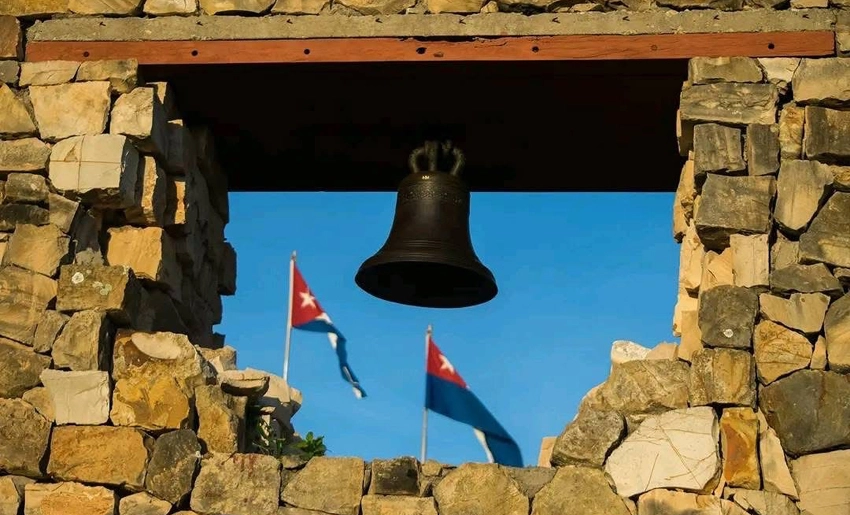
That morning, at the La Demajagua sugar mill, a group of illustrious Cubans surrounded an energetic man who addressed those present. Informed them of the purpose of the meeting. Declared the principles of the insurrectionary movement, freed their slaves, and called on them to join the struggle.
It was Carlos Manuel de Céspedes who led that first group that would pave the way to the definitive victory that would cost so much worthy blood. Setbacks and shared joys and victories followed, but no one can deny the value of that moment.
There, in a sugar mill in eastern Cuba, one of the bravest chapters of our history began. One that demonstrated that the Creoles were more than subjects: they were Cubans yearning for freedom and self-determination. A homeland where there was room for everyone—that was the goal.
With the Demajagua Uprising, the fighting traditions of the Cuban people were consolidated, having struggled for centuries to see their goal realized. Ninety-one years later, in 1959, the dream of Céspedes and many others was finally fulfilled. In that year, the homeland was finally free.
By: Jorge Alejandro Fernández Pérez

- Holguin Health Sector Strengthens Ties with Adolescents and Youth - 1 de October de 2026
- Trump’s measures against Cuba: another step toward strangulation - 1 de October de 2026
- Cuba prioritizes respect and care for older adults - 1 de October de 2026