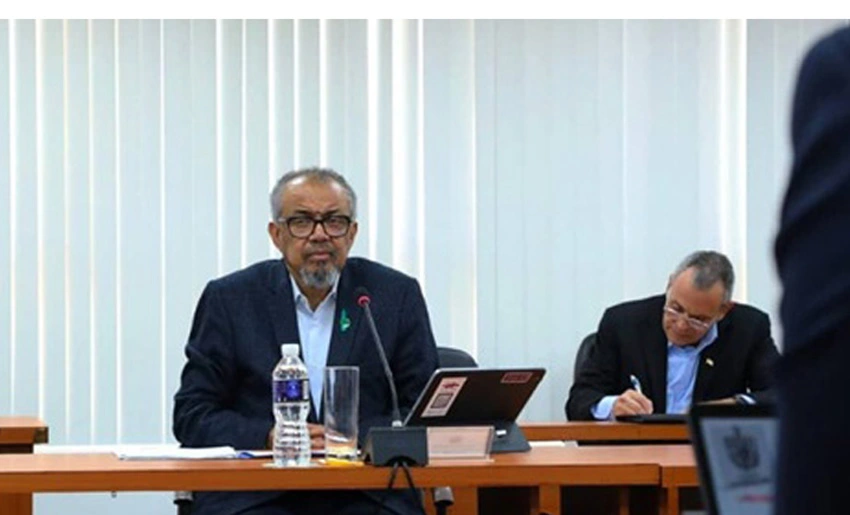
During the meeting at the Palace of the Revolution, the president highlighted the significance of the WHO delegation’s visit. Noting that the nation is currently facing a complex situation. He pointed to the intensification of the economic blockade, energy constraints, and the “maximum pressure” policy imposed by the United States government. Factors that, he stated, impact the daily lives of the population, particularly regarding healthcare services.
Díaz-Canel shared data on the primary challenges affecting the health sector. He reported that over 100,000 people—including approximately 20,000 children—are currently awaiting surgical procedures. A situation driven primarily by energy shortages and a lack of medical supplies and medications.
Furthermore, he noted that more than 34,000 pregnant women are not receiving the full range of required care and monitoring. While over 67 percent of the essential medicines list is affected by shortages. Additionally, more than 10,000 patients face difficulties accessing radiology treatments, and another 10,000 require hemodialysis.
The head of state also addressed the challenges facing the childhood vaccination program and the decline in health indicators. In this regard, he pointed out that the infant mortality rate—which previously stood at four per 1,000 live births—has reached 9.9 so far this year. Despite this scenario, the head of state acknowledged the work of medical and nursing staff, who continue to provide services amidst power outages and transportation limitations. “No blackout, no blockade can extinguish our hope,” he stated.
Díaz-Canel also expressed his gratitude for the statements made by the WHO General Director in March 2026. Regarding the consequences of the energy blockade on the health of the Cuban population. As well as for the cooperation and resource mobilization promoted by the organization to help address the situation.
He further reiterated Cuba’s commitment to maintaining its ties with the WHO and expanding collaborative efforts through joint research and new cooperation initiatives. Which would allow for the sharing of the country’s experience and capabilities in the healthcare sector.
For his part, Ghebreyesus expressed his thanks for the welcome and explained that his discussions with officials from the Ministry of Public Health provided insight into the challenges Cuba is facing.
The WHO head also mentioned his visits to the William Soler Pediatric Hospital and the Center for Genetic Engineering and Biotechnology (CIGB). Institutions where he was able to observe the progress the country has achieved in the scientific and healthcare fields.
He voiced his concern regarding the consequences of the blockade, recalling that in March 2026. The organization issued a statement on the potential impact this situation could have on Cuban health services. He added that, on the sidelines of the World Health Assembly, a decision was reached to provide support to the island nation.
Participants in the meeting included, on the Cuban side, Minister of Public Health José Ángel Portal. Deputy Minister of Foreign Affairs Anayansi Rodríguez; and Mayda Mauri Pérez, president of the BioCubaFarma business group.
The official visit of the WHO General Director provides an opportunity to discuss current challenges facing the Cuban healthcare system and ways to strengthen international cooperation for the benefit of the population’s health.
With information from Prensa Latina

- Díaz-Canel Expresses Gratitude for WHO Support for Cuban Public Health - 26 de November de 2026
- Business Forum Held in Holguín in the Context of FIHAV 2026 - 26 de November de 2026
- “Green Soul” Project Focuses on Nature Conservation in Holguín - 25 de November de 2026