
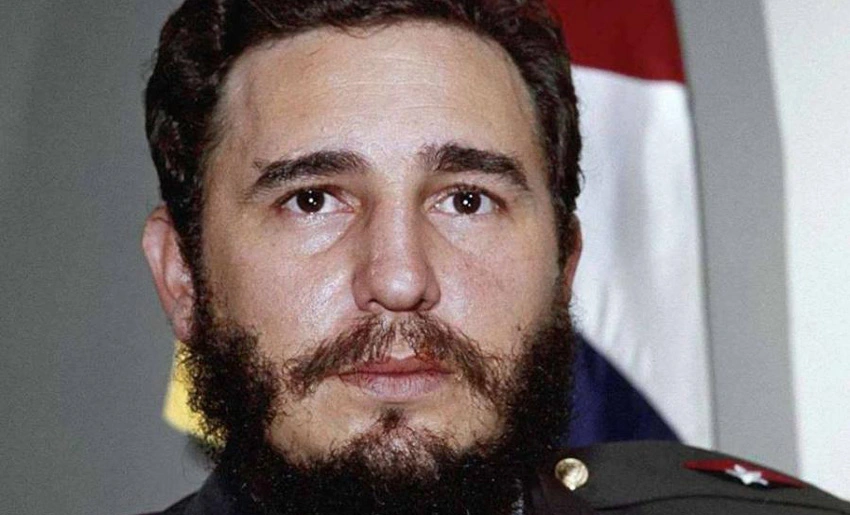
Under Fidel Castro’s leadership, the push for the release of the Cuban Five, who were unjustly imprisoned in the United States for years, transcended borders.
Hundreds of thousands of people of goodwill, across the political spectrum. Joined the cause and placed their trust in a prophecy uttered by Fidel that became a compass and guiding principle. In the battle to bring them home: “I’ll tell you one thing. They will return!”
On the centenary of the birth of the leader of the Cuban Revolution (1926-2026). René González Sehwerert, who, along with Gerardo Hernández Nordelo, Ramón Labañino Salazar, Antonio Guerrero Rodríguez, and Fernando González Llort, played a leading role. In one of the most dignified chapters of the island’s recent history, reflects on him in articles for Prensa Latina.
“On Monday, September 14th, 1998, for the first time since our arrests the previous Saturday. Those of us who would later be charged in the case that eventually became known as the Miami Five were able to meet,” he said.
It was our first appearance in federal court. In what would later become a very long process, and an even longer story, he added. But “leaving aside the defendants who decided to distance themselves—a story that’s irrelevant here—. So those of us who would eventually be known as the Five recognized each other after the first few words.”
In that conversation, which, from the very beginning, defined our state of mind in the face of the ordeal that lay ahead. Three historical precedents emerged that would serve as the basis for our decision at that moment, he commented.
First, he emphasized, “history will absolve me, the commitment to not leave Che alone in the Miguel Schultz prison. Prior to the departure of the Granma, and the decision not to abandon the yacht’s helmsman. Roberto Roque, when he fell into the sea just hours before the landing.”
In each of those events, Fidel’s figure emerged as the protagonist, because in those fateful moments. When the only expectation about our future was uncertainty, the Five harbored the most absolute confidence. Fidel, true to his principles, would never abandon to their fate those who defended Cuba, its people, and the Revolution.
Of course, we knew from the first day that the battle would be hard, stressed the Hero of the Republic of Cuba.
Looking at it through the prism of history. It wasn’t the best time to get involved in a process like that, González Sehwerert explained.
“The Soviet Union had disappeared, the Cuban nation no longer had the political allies it once had. The atmosphere between the Miami counterrevolution and within the American political establishment could not have been more hostile. Also the horizon could not have looked bleaker, and the prospects for a political solution were almost nil.”
Furthermore, he recalled, “it would be a couple of years before the Latin American balance of power, pushed by Hugo Chávez, shifted to the left.”
But the Five had the enormous confidence that Fidel inspired in us, he affirmed. Noting that “the path to the public recognition of the Five’s loyalties was long and fraught.”
The signals, and later messages, from Cuba unfolded in very subtle ways at first, and gradually became more evident. Outlining the defense strategy and our admission of the purpose that had brought us to Miami.
“Finally, once the oral trial phase was over, both the Commander and the five of us were freed from secrecy. And then Fidel spoke,” he noted.
It was on “June 23rd, 2001, in the Havana municipality of Cotorro,” when “the first public forum regarding the case took place. In it, Fidel uttered a phrase that would become famous: ‘I’ll tell you one thing: They will return!’” René added.
“For us, the Five, who listened to the speech from our cells, those words were an enormous encouragement. A confirmation of our trust in the Commander,” he emphasized.
He added that for the families of the Five and for the Cuban people, “they were a battle cry. And the beginning of a campaign that would gradually mobilize the conscience of the world. Also to bring together people of all political, religious, and philosophical persuasions.”
“For Fidel, in addition to everything mentioned above, it represented something more: a new purpose to which he could dedicate all his enormous will, energy, and time. One more battle against imperialism, another political challenge to overcome, the opportunity to embark on the search for justice. As he had so many times before, and to triumph once again. On the moral front, over Yankee imperialism,” he emphasized.
Fidel dedicated himself to the struggle for the release of the Five. Possessed by the idea and the goal he had set for himself. He insisted that “as time went on, the legal charade the process had become weighed heavily on the shoulders of the U.S. government. Until the conditions proved untenable for Washington.”
Thus, amidst his enormous responsibilities as head of state, Fidel became part of our families. Mastering the intricacies of the case and becoming the strongest advocate for our release. Confessed René, who served his arbitrary sentence in full.
Referring to the leader of the Cuban Revolution, he noted that “the enormous weight of his moral authority and political stature exponentially multiplied the voices demanding justice across the globe. Mobilized organizations, prominent figures, parliaments, and jurists in a single demand.”
“On December 17th, 2014, the last three of the Five returned, having served their full sentences.” “Being able to enjoy that victory, with Fidel alive to witness it, was one of the sweetest feelings for us,” he added.
“Being able to visit him later, and having spent a few hours with him. It will remain one of our most cherished memories,” he concluded.
The return of the Five reaffirmed the almost blind faith we shared as early as two days after the arrest (September 12th, 1998), the Cuban counterterrorism officer indicated.
For René González, “it also represented the validation of the trust that Fidel placed in us when he risked his word before the world from that platform in Cotorro. And gave us the pride of having delivered, in the twilight of his life, that final and resounding victory. No one deserved it more than he did.”
With information from Deisy Francis Mexidor/Prensa Latina

- Holguin Health Sector Strengthens Ties with Adolescents and Youth - 1 de October de 2026
- Trump’s measures against Cuba: another step toward strangulation - 1 de October de 2026
- Cuba prioritizes respect and care for older adults - 1 de October de 2026