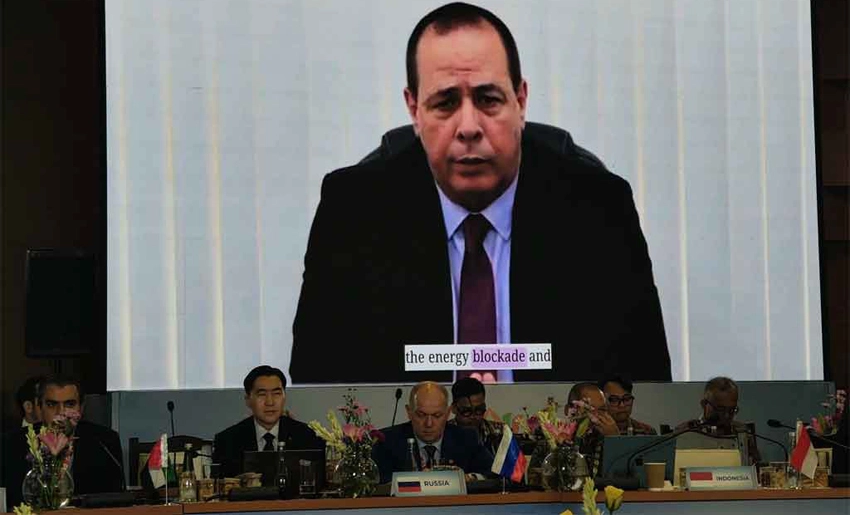
Cuba denounced today, in the face of the BRICS countries, the human cost of the impact on the health sector caused by the economic, commercial, and financial blockade. As well as the energy embargo, imposed by the United States.
In a video message for the BRICS health ministers’ meeting in India. Cuban Minister José Ángel Portal Miranda expressed the Caribbean nation’s willingness. To expand cooperation with the members of the intergovernmental group. And share the experience accumulated in multiple areas of the sector.
Portal Miranda explained that his absence from the aforementioned event was due to the complex situation facing Cuba. Marked by the unprecedented intensification of the blockade, the energy embargo, and the constant threat of possible aggression from Washington.
He noted that, regardless of the difficulties, Havana remains committed to working toward a future. Where science, innovation, solidarity, and sustainable development translate into better health for all our people.
Also he considered the meeting a valuable opportunity to reaffirm that, in the face of the multiple crises confronting humanity. It is essential to strengthen resilient health systems, promote innovation. And expand cooperation to guarantee universal access to quality services.
The Cuban minister emphasized that only through joint work, solidarity, and the comprehensive One Health approach. Which Cuba endorses, can we effectively respond to challenges. Such as climate change, emerging diseases, and growing inequalities, which threaten the survival of humanity.
He added that, in Cuba, health is a constitutional right, guaranteed through a universal and free system. Supported by highly qualified professionals and workers. He also noted the development of Cuban science and the biopharmaceutical industry. Areas that have allowed Cuba to achieve outstanding health indicators.
Portal Miranda denounced that the US blockade severely limits the functioning of his country’s National Health System. With the consequent damage to the quality of life of its people.
“Behind these restrictions are faces, patients, families who are suffering,” he emphasized.
The Cuban minister elaborated that, currently, more than 100,000 people are waiting for surgery, including 12,000 children. Infant mortality has increased to 9.9 per 1,000 live births by the end of 2025. And the survival rate of children with cancer has declined due to limitations in accessing first-line treatments.
“Despite these adversities, our health system continues to provide services. Cuba maintains its commitment to international cooperation,” he pointed out.
Furthermore he added that more than 16,000 healthcare professionals are currently working in 50 countries. As an expression of South-South cooperation based on solidarity, intergovernmental agreements, and respect for sovereignty.
With information from Prensa Latina

- Jorge Gómez: 47 Years Behind the Wheel at Radio Angulo - 22 de October de 2026
- Cuba Begins Its Journey Toward the U-18 Baseball World Cup in the Dominican Republic - 22 de October de 2026
- China Supports Cuba’s Sovereignty in Face of Arrest Warrant for Raúl Castro - 22 de October de 2026