
The Cuban city of parks has once again become the epicenter of young creativity. The 33rd edition of the Romerías de Mayo festival kicked off with the force of a cultural hurricane. Solidifying this eastern province as the meeting point where tradition and modernity come together. Under the auspices of the Hermanos Saíz Association (AHS).
From the early hours, the festive atmosphere was sealed with the mysticism of the “Wine Dew.” A blessing ceremony led by the “Bayado” winemakers’ club that marks the spiritual beginning of these days.
The event is not just a party; it is, above all, a time for reflection. The “Our Memory” Thought Congress, considered the heart of the Romerías (pilgrimages). Opened its doors with a keynote address by researcher Katiuska Blanco on the historical figure of Fidel Castro.
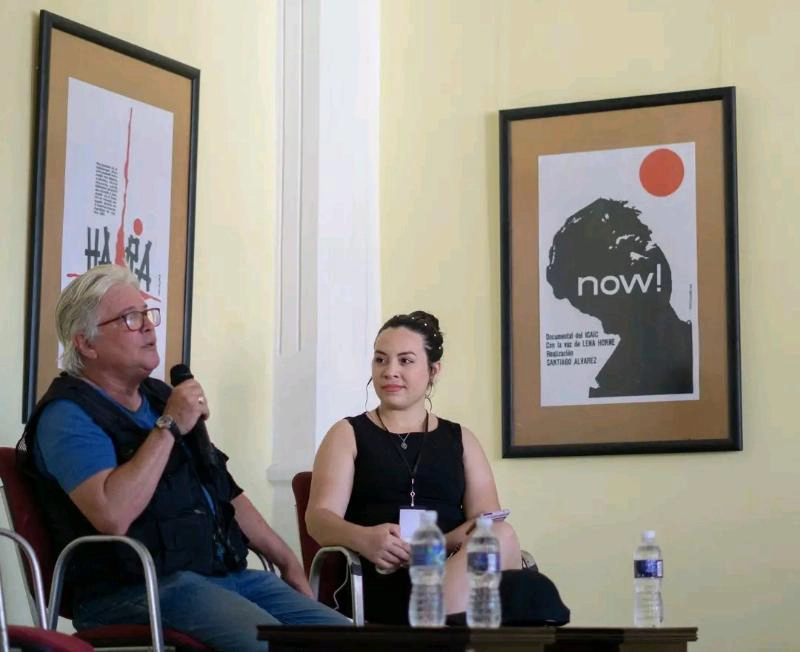
Simultaneously, the theoretical debate extended to other venues: Blue Camera. Renowned filmmaker Roly Peña shared his experiences in the discussion “The Approach to History in Cuban Cinematography.”
Babel: At the Center for Visual Arts, a tribute was paid to the pedagogical work of José Aguilar on his 65th birthday.
Literature claimed its space with the inauguration of Shared Words. This year, the literary event unfolds under the theme “Paradiso: Map of Signs.” Celebrating the 60th anniversary of José Lezama Lima’s masterpiece and the 40th anniversary of the AHS (Hermanos Saíz Association).
The artisanal exhibition “Poesía de cordel” (Poetry on String), by Andrés Zaldívar. He gave way to the panel “Ríos secretos bajo la tierra” (Secret Rivers Beneath the Earth). Also where intellectuals Lino Verdecia and Manuel García Verdecia, moderated by Erian Peña. They delved into Lezama Lima’s cosmogony from the “Abrirse las constelaciones” (Opening the Constellations) room of the Holguin-based publishing house.
The commitment to emerging artists was reaffirmed at the Art Center with the collective exhibition “Isla de Algodón” (Cotton Island). A show that captures the concerns of new creators. Meanwhile, the stage vibrated with the energy of groups like El Juglar del Cisne (The Swan Minstrel), Fantasía e Ilusiones (Fantasy and Illusions), and Catarsis (Catharsis). Also who brought theater to the everyday life of the pilgrimage.
Music has been the common thread of these first few hours. While the Mango Duo and singer-songwriter Nelson Valdés championed singer-songwriter music and trova. The Plaza de la Marqueta became a hotbed of contemporary sounds. DJs Gatillo, Traxxer, and Acid Seduction got the crowd dancing with the best of electronic and alternative music.
Until May 8th, Holguin will continue to be the festival of festivals. With a program that still includes jazz, rock, hip-hop, and film criticism. The Romerías de Mayo (May Pilgrimages) demonstrate why they are, today, the most important multicultural event in Cuba.
By: Daimy Peña Guillén

- Putin states that BRICS has generated over 40 percent of global GDP - 12 de September de 2026
- Between the wind of the tenths and bottled art - 12 de September de 2026
- ETECSA Holguin Hosts Science and Technology Forum - 12 de September de 2026