
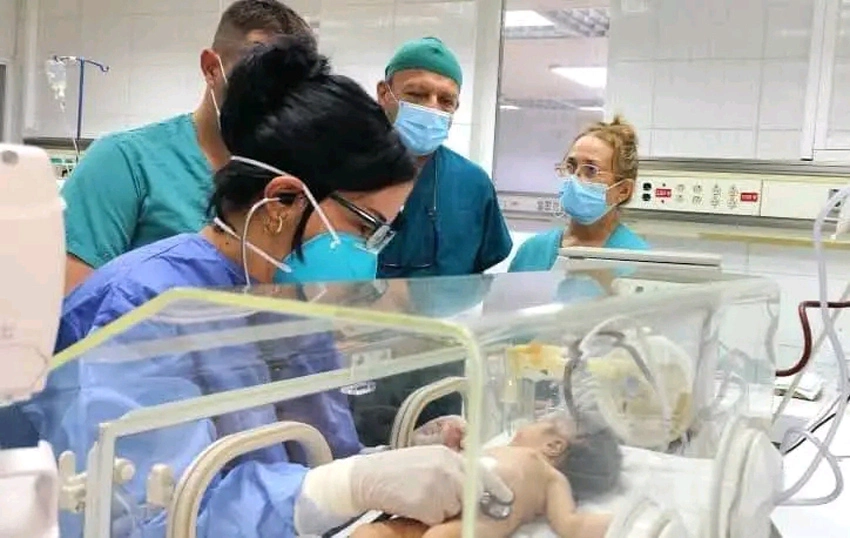
In the complex energy landscape facing Cuba, marked by blackouts and fuel shortages. The “Octavio de la Concepción y de la Pedraja” Pediatric Hospital in Holguin stands as a bastion of hope for eastern Cuba. Serving not only the province but also areas of Las Tunas and Granma. This center demonstrates that the absolute priority is saving the lives of the youngest patients. Relying on the compassionate care of its staff and an ambitious energy sovereignty project.
Cuba is facing one of its most severe energy crises in decades. With total shutdowns of the National Electric System (SEN). In this context, the strategy in the province of Holguin has been clear and decisive: protecting vital services above all else.
As reaffirmed by the Provincial Director General of Health, Dr. Julio Yamel Verdecia Reyes, “today all 14 hospitals in the province remain operational.” It is a matter of “political, governmental, and health-related commitment.” Also to ensure that healthcare institutions have the necessary energy backup. In the event of a power outage, protocols are activated to create “microsystems” or “islands” of generation. Giving absolute priority to the hospital network and water supply.
In the city of Holguin, this translates into protecting the circuits that supply power to the Pediatric Hospital. Along with the Clinical-Surgical and Military Hospitals, through the use of distributed generation.
The situation at the “Octavio de la Concepción de la Pedraja” Hospital contrasts sharply with the widespread difficulties. As recently highlighted, the Neonatology services, the Regional Center for Neonatal Surgery, and the Intensive and Intermediate Care Units remain operational. The hospital, which has approximately 540 beds and more than 35 specialties. It has spared no effort to guarantee care for critically ill children.
This responsiveness is not a matter of chance. The province has implemented a prioritization strategy that ensures fuel for the generators supporting the intensive care and neonatal units. True to their commitment, healthcare workers apply clinical methods when technology fails and humanize every gesture amidst adversity. Demonstrating that, despite the circumstances, the quality of care is maintained.
Beyond the diesel generators, the Holguin pediatric hospital is about to take a significant leap toward energy independence. Thanks to a project by the United Nations Children’s Fund (UNICEF). So the center will be one of the beneficiaries of a program to install photovoltaic solar panels.
Dr. Verdecia Reyes explained that this “very ambitious project” aims to protect hospitals prioritized by the Maternal and Child Health Program. “They will benefit… the Octavio de la Concepción de la Pedraja Pediatric Hospital. Which serves several eastern territories.” Currently, other institutions in Holguin already benefit from this technology. Such as the “March 8th” Maternity Home, the Psychopedagogical Center, and the Psychiatric Hospital.
This initiative positions the Holguin Pediatric Hospital at the forefront of renewable energy use within the Cuban healthcare sector. Reducing its dependence on an increasingly fragile national grid.
Moreover the Pediatric Hospital is a reflection of contemporary Cuba: it struggles against the restrictions of the blockade and the energy crisis. Yet innovates with solar energy projects and perseveres with unparalleled human capital. While the photovoltaic panel projects are being implemented. Healthcare workers remain the country’s primary source of renewable energy: inexhaustible, clean, and profoundly human.
By: Daimy Peña Guillén

- Social transformations analyzed during meeting with Minister of Labor in Holguin - 9 de October de 2026
- Tradition and Color at Iberoart Fair in Holguin - 9 de October de 2026
- Japanese delegation inspects startup of Caletones desalination plant - 9 de October de 2026