
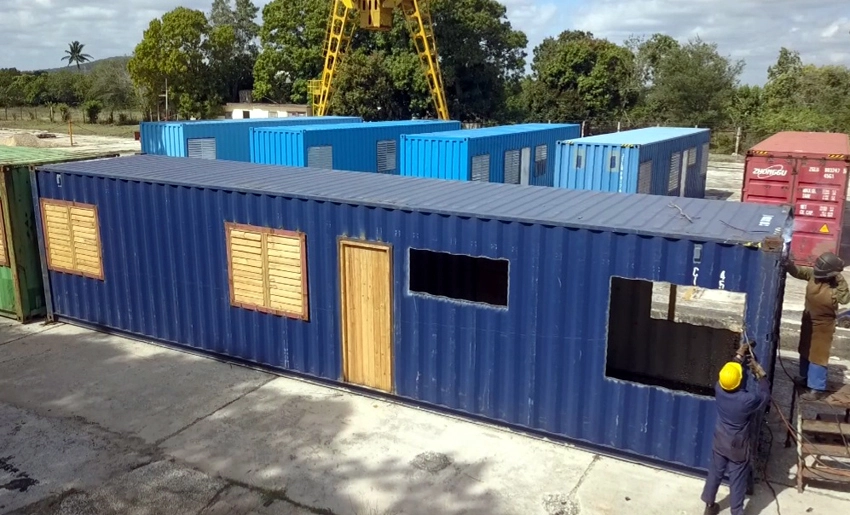
In Cuba, where access to housing remains a structural challenge. Alternatives are emerging to expand construction capabilities. Amid economic limitations and the difficulty of accessing traditional materials. Reusing metal shipping containers, originally designed for cargo transport, appears as a viable option.
This is not a definitive solution, but rather a path that. Through popular ingenuity and institutional will, seeks to alleviate one of the population’s most pressing needs.
The Ministry of Construction’s program envisions the adaptation of more than 3,500 structures nationwide. Prioritizing vulnerable families while refining a process that combines ingenuity, solidarity, and limited resources.
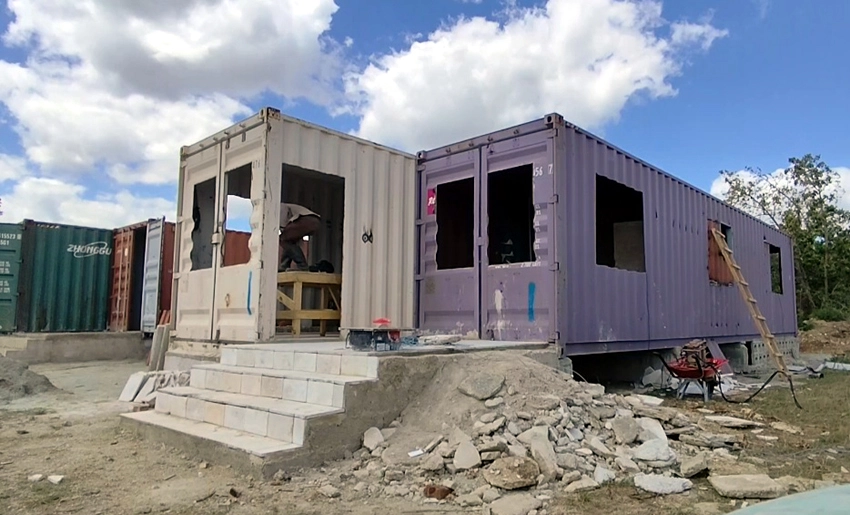
Photo: Eddy de la Pera
Behind each of these structures transformed into homes lies a process of collective work and specialized expertise. Amauri Borrego Pozo, a worker, precisely describes the chain of effort: “There are two technicians who lay out the plan. And then I come in behind them with my assistant. Cutting the metal with a straightedge and shaping it until another team comes in to install the window and door with the welder. And then comes the painting, which is the almost final touch-up.”
Also the transformation goes beyond the metal structure. To guarantee thermal comfort, construction solutions are applied that address one of the main concerns about this type of building. Worker Carlos González explained: “The container is lined with a material called melamine, like a Formica, on the inside, which is the cladding. And so it’s really not as hot as people think. Besides that, it has a small roof on top, a gabled roof that helps to mitigate the heat a bit.”
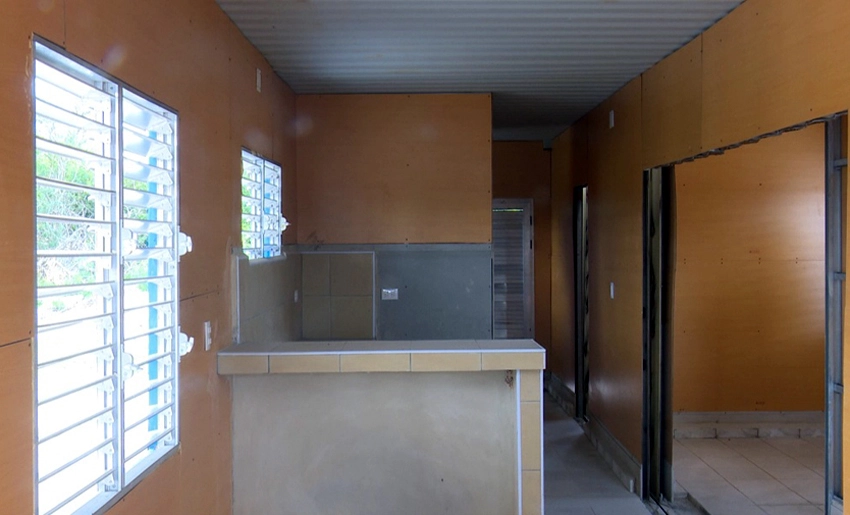
Photo: Eddy de la Pera
Promoted by the Ministry of Construction, the plan envisions the adaptation of more than 3,500 containers as homes throughout the country. Its implementation is progressing gradually. With local projects and limited resources, but with a clear focus on equity. The program prioritizes vulnerable families. Including mothers with more than three children and people affected by weather events.
Moreover the quality of the solutions is an essential premise. Alian Cordobés Toirac, an executive at the Ministry of Industries, emphasized: “A house, regardless of the very difficult situation [in Cuba]. It must meet certain conditions, the minimum necessary to ensure it is comfortable for its occupant.”
The experience of those who have already received these homes confirms the positive impact of the initiative. Daylin Fernández Parza, a beneficiary after being affected by a hydrometeorological event, recounted with satisfaction: “I am very grateful. The house has two bedrooms, a bathroom, a terrace, a kitchen, and a small porch; it’s quite cool.”
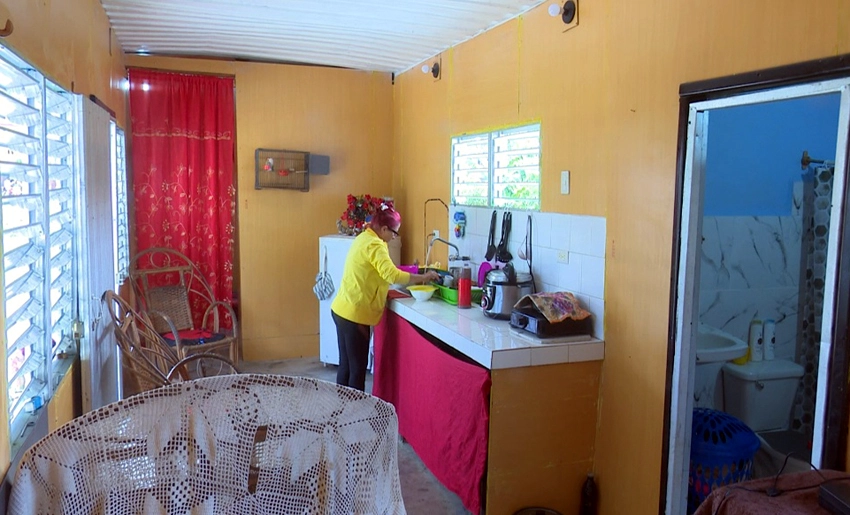
Photo: Eddy de la Pera
Furthermore the housing deficit in Cuba exceeds current construction capacity. In a context marked by economic limitations and difficulties in accessing materials. External factors also contribute to the increased cost of supplies and the slow pace of larger-scale programs. In this scenario, ingenuity and community participation are essential.
For the workers involved in these transformations, the work transcends the technical aspects. Carlos González expressed the common sentiment among his colleagues: “We’ve worked hard, and that gives us satisfaction because, well, it’s someone we’re going to help. Someone who will feel more comfortable because it’s not easy having a roof over their head that leaks. There are many people who don’t have a roof either, who are living in a relative’s house.”
The provincial director of Housing, Yuriel Zaldívar, confirmed that the largest settlement of this type is currently under construction in the city of Holguin. Which will have 31 units out of a plan for several dozen this year.
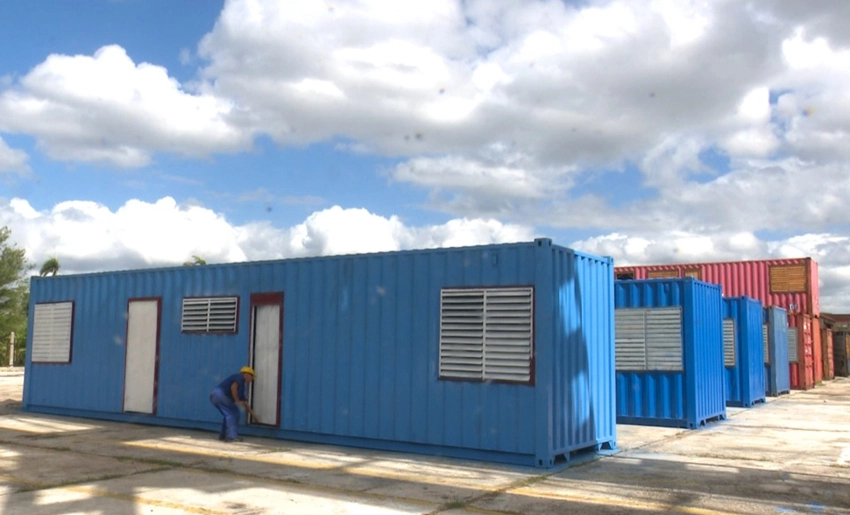
Photo: Eddy de la Pera
The work, carried out by the Industrial Works Construction Company ECOI No. 9. It includes the use of zinc roofs and interior wood paneling to insulate against high temperatures. As well as the construction of bathrooms using concrete blocks and cement.
Other entities are participating in the project, such as the 60th Anniversary of the October Revolution Company, located in the city of Holguin. Which is responsible for creating openings for doors and windows. While also ensuring connections to the electrical and water supply networks.
These alternatives don’t replace structural policies, but they complement the everyday response. The aim is not to present these experiences as the definitive solution to the housing problem. So rather to understand them as initiatives that provide relief without addressing the root cause. They are concrete stories from specific territories that resonate with common challenges in Latin America. Some access to decent housing and the search for options in adverse contexts.
From Cuba, this construction alternative speaks more of resilience than definitive solutions. It demonstrates how, with limited resources but with will and organization. Paths can be paved so that more families have a roof over their heads where they feel safe.
By: Daimy Peña Guillén

- Holguin Health Sector Strengthens Ties with Adolescents and Youth - 1 de October de 2026
- Trump’s measures against Cuba: another step toward strangulation - 1 de October de 2026
- Cuba prioritizes respect and care for older adults - 1 de October de 2026