
Analysts today value universities not only as a repository of knowledge, but also as an engine reshaping the global economy.
This view is reflected in reports from the most prestigious institutions of higher learning. And the professors who make up their faculty, especially in 2026.
In a year of moderate growth and economic fragmentation. Higher education institutions become central to innovation, talent attraction, and wealth creation on a global scale.
While the global economy navigates moderate growth and persistent geopolitical tensions between blocs in 2026. A powerful actor emerges whose impact transcends the classroom: the university.
This occurs at a time when the International Monetary Fund (IMF) estimates global GDP growth at 3.1 percent.
Far from being ivory towers, academic institutions are consolidating their position. As indispensable engines of economic development. Hubs of technological innovation, and magnets for cross-border investment.
The global landscape presents both positive and negative aspects. The United States maintains its dynamism thanks to investment in artificial intelligence. While China sustains its growth based on exports. Although it suffers from internal imbalances.
In this context of neo-mercantilism and geoeconomic rivalry, universities act as counterweights and catalysts.
In this case, they not only train the talent demanded by the technological revolution (AI, quantum computing, and robotics). They also become the nerve centers of research and development that define the competitiveness of nations.
The economic impact is measurable. In the United States alone, international students (1.2 million before recent immigration adjustments). Contributed approximately $55 billion annually to the economy through tuition and living expenses.
However, 2026 presents a challenge: the 17 percent drop in new international students in the United States. It represents an estimated loss of $1.1 billion, highlighting how immigration policies directly impact economic vitality.
And this is particularly true for the economic vitality of university communities.
International students sustain local economies, boost businesses, and generate tax revenue, explains Bjorn Markeson, an economist at Implan.
Implan is the municipal government agency responsible for land-use planning. Regulating the growth of human settlements in urban and rural areas, and economic activities, in harmony with the environment.
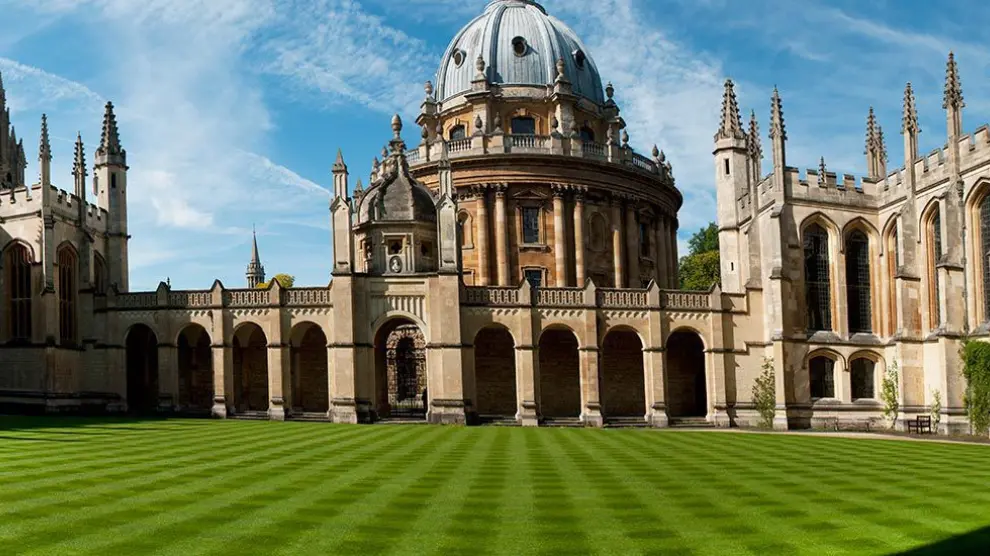
In the United Kingdom, the University of Oxford (which will celebrate a decade as number one in the Times Higher Education rankings in 2026). And the University of Cambridge continue to be cornerstones of the British economy.
In this way, they attract global talent and generate educational export revenues. Exceeding 30 billion pounds annually for the country (one pound is equivalent to 1.35 dollars).
But the true transformative power of these institutions is revealed in global rankings.
According to the QS World University Rankings 2026 and the US News ranking. Anglo-Saxon universities maintain their hegemony: Harvard, MIT, and Stanford occupy the top positions in academic prestige and scientific output.
Despite this, the Asian rise is unstoppable: China places five universities among the top 40 in the world according to Times Higher Education. With Tsinghua and Beijing climbing the ranks and competing on equal footing with the Ivy League in technological innovation.
In Latin America, the landscape is more complex. The University of Buenos Aires (UBA) remains the only Latin American representative among the top 100 in the world in the QS ranking. Although it has fallen to 84th place, for example.
Therefore, while artificial intelligence, decarbonization, and trade fragmentation redefine the world order. Universities remain beacons of stability and engines of the future.
With information from Prensa Latina

- Social transformations analyzed during meeting with Minister of Labor in Holguin - 9 de October de 2026
- Tradition and Color at Iberoart Fair in Holguin - 9 de October de 2026
- Japanese delegation inspects startup of Caletones desalination plant - 9 de October de 2026