
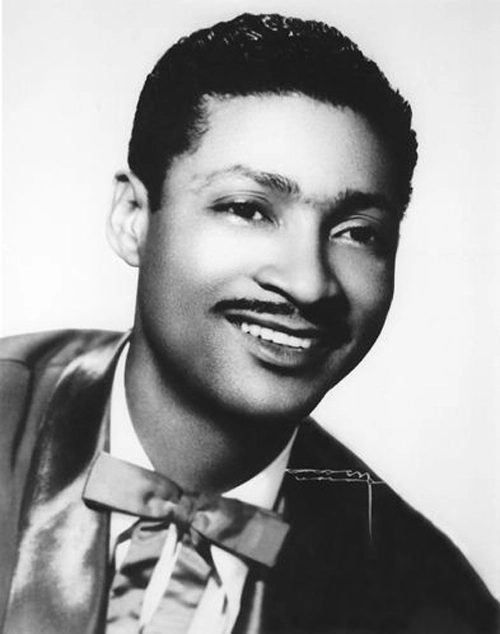
Many years later, that little girl would still remember the afternoon the radio stopped playing. She lived with her grandparents in a sugar mill. In a house of wood and tile that smelled of coffee and jasmine. There, in the living room, presiding over the space like an altar. Stood the RCA Victor radio, a dark wooden cabinet with yellow dials that at night resembled cat’s eyes. Where the Barbarian of Rhythm would soon be the subject of a sad news story.
Her grandmother sewed, sitting in her wicker chair. Moving the needle with that rhythm only hands accustomed to work possess. The little girl, lying on the red cement floor. Tried to do her school math, but her attention drifted aimlessly, lulled by the music coming from the loudspeaker.
It was an afternoon like so many others, one of those that repeat themselves without warning until something shatters them forever. The music was playing, a son, a guaracha, perhaps Benny himself. Whose name was so often heard back then without anyone saying it, as if he were the very air. And suddenly, silence. Not a gentle silence, like the end of a song, but a sharp, abrupt silence, like when the power goes out and everything is plunged into darkness.
The girl looked up and saw her grandmother motionless, the needle suspended in mid-air, her eyes fixed on the radio. Then, the announcer’s voice pierced the gloom, deep and broken: “Attention, Cuba… Benny Moré has died.”
Bartolomé Maximiliano Moré Gutiérrez, the Barbarian of Rhythm, had died in Havana at the age of forty-three. The same age as the girl’s older uncle, the one who worked at the sugar mill and came home with his face covered in sugarcane dust. It seemed incredible to her that someone who sang with such power. With such raw emotion that seemed like both joy and sorrow, could be gone so soon.
His songs began playing one after another on the radio, and then she understood. With that sudden clarity that children sometimes possess, what her grandmother already knew. That Benny’s music wasn’t simply music, it was the invisible tapestry of their lives.
“Como fue” “came on”, and she remembered the Sundays when her father, before leaving for work at the sugar mill. Would whistle it while shaving in front of the broken mirror in the yard. “Hoy como ayer” “came on”, and her grandmother. Still standing by the radio, let out a deep sigh, one of those that holds entire years. One of those that needs no words. “Yiri yiri bon” came on, and even she, barely a child. It felt a tingle in her feet, because that was Benny’s magic, the ability to get into your blood without asking permission. To make anyone, anywhere, feel the need to move.
The news spread through the village like a raging river. The neighbors came to their doorways. Peered out from their porches, and instead of speaking. They looked at each other in silence. As if sharing a grief that needed no explanation. It was as if a distant relative had passed away, one of those you never see but know are there. Making the world feel larger, the distance more bearable. Benny Moré was that: a man who, without knowing anyone, knew everyone.
He was born in Santa Isabel de las Lajas. A town lost in the heart of the island, and had traveled half the world with his voice, but he never lost his homeland’s accent. The son montuno, the guajira, the feeling that you only learn when you’ve grown up among palm trees and sugarcane fields.
It was said that he could sing anything, that he improvised as if the songs had always been waiting for him to find them. And when he conducted his Banda Gigante. That orchestra of more than forty musicians, he did so without sheet music, from memory, with an imaginary baton he carried in his soul. That’s why, when he died, it wasn’t just a singer who left. It was a piece of Cuba that detached itself from the earth and became air.
That night, at the sugar mill, no one played any other record. Radio stations across the country dedicated their programming to the King of Rhythm, and people listened in silence. As if they were at a collective wake, as if each song were a lit candle. Before sending her to bed, the grandmother sat beside the little girl and said, “People like Benny don’t die, my child.
They go on a journey, and sometimes, when you least expect it, they return in a song.” The girl didn’t quite understand those words then, but she stored them somewhere in her memory. Without knowing that over the years they would return again and again.
Time passed, as it always does, taking some things away and bringing others. The girl grew up, the sugar mill changed, the wooden house is gone, and the RCA Victor radio is just a memory in the minds of the old folks. But every February 19th, when someone turns on the radio and Benny comes on, something stops.
An elderly woman closes her eyes and returns to that afternoon in 1963, to the dimly lit living room, to her grandmother’s gesture of turning off the stove. And then she understands, at last, what those words meant: that the Barbarian of Rhythm didn’t really leave. That he remained in the air, waiting for someone, in any corner of the island.
Also to turn on the radio and bring him back. Because as long as there is a Cuban with a memory. As long as there is a song playing in any home. Benny Moré will continue to sing. And Cuba, even if it sometimes forgets, will continue to be a little more Cuba thanks to him.

- Innovating in Cuba: the talent that produces, saves, and solves - 7 de October de 2026
- Cuban Deputy Prime Minister Assesses Water Availability in Holguin - 2 de October de 2026
- Social Media: A Mirror of Our Humanity - 30 de June de 2026