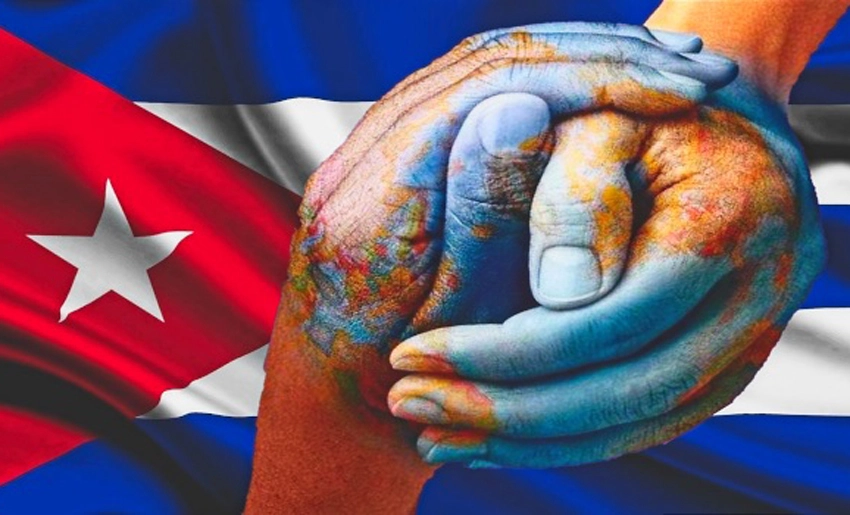
Faced with renewed attempts by the United States to suffocate Cuba. The world is responding with support at the highest levels. Solidarity and support persist despite the blockade and come from diverse regions.
Mexico, from where more than 800 tons of humanitarian aid recently departed for Cuba, “will always be in solidarity, seeking the best way to support the Cuban people,” President Claudia Sheinbaum told the press.
China reiterated today its firm support for Cuba in the face of external interference and inhumane actions. That affect the right to subsistence of its people. Foreign Ministry spokesman Lin Jian emphasized his country’s support for Havana in safeguarding its national sovereignty and security.
Similarly, Russia denounced the neocolonial stances of the United States against Cuba. Kremlin spokesman Dmitry Peskov stated yesterday that they are maintaining close contact with the island. So to explore “possible ways to resolve these problems, or at least alleviate them.”
Russian Foreign Minister Sergey Lavrov emphasized that Russia is interested in continuing the practice of honest international cooperation on equal terms. In accordance with the principles of mutual understanding, trust, and good neighborliness.
For his part, Brazilian President Luiz Inácio Lula da Silva asserted that, for more than 60 years. Cuba has been “the victim of a massacre fueled by American speculation.” He also questioned Washington’s measures to restrict oil access to the island and advocated for an end to sanctions and Cuba’s full reintegration into the global economy.
Pope Leo XIV, in turn, expressed concern over the escalating aggression by the United States government against Cuba and called for the avoidance of any action that could increase the suffering of the Cuban people.
The Non-Aligned Movement (NAM) asserted that the measures taken by the Trump administration have extraterritorial effects and negatively impact not only Cuba and its people, but also third-party states and international economic relations.
Also the NAM reaffirmed its solidarity with the Cuban people and government and urged the international community to defend international law, multilateralism, and the purposes and principles enshrined in the Charter of the United Nations.
Likewise, the Bolivarian Alliance for the Peoples of Our America (ALBA-TCP) categorically rejected the Executive Order of the President of the United States: “This action, which is part of the historical policy of economic, commercial, and financial blockade against Cuba, seeks to subject an entire people to extreme living conditions.”
Far from breaking the Cuban people, these actions, which have been repeatedly and almost unanimously condemned by the international community, have demonstrated the resilience, dignity, and resolve of a nation that defends its independence and its right to build its own political, economic, and social project without external interference, threats, or aggression.
Meanwhile, the UN “continues to monitor the situation in the country and work with the government to provide greater support. Including food, water, sanitation, and medical care. We are concerned about the growing fuel shortage and its impact on the population,” said UN spokesperson Stéphane Dujarric at a press conference.
With information from Granma and Prensa Latina

- Holguin Health Sector Strengthens Ties with Adolescents and Youth - 1 de October de 2026
- Trump’s measures against Cuba: another step toward strangulation - 1 de October de 2026
- Cuba prioritizes respect and care for older adults - 1 de October de 2026