
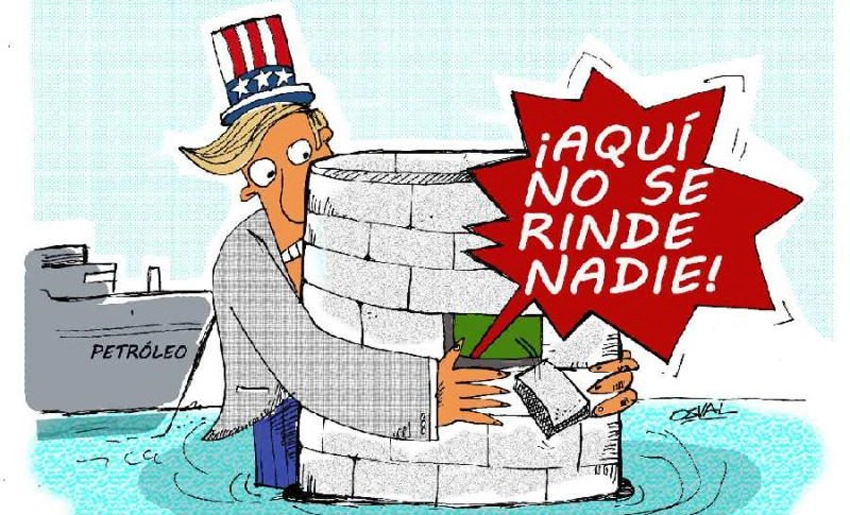
In the context of the intensification of the economic and financial blockade against Cuba, the government has announced a series of measures. Aimed at guaranteeing basic services and the defense of the nation. Including the approval of plans for a potential “State of War.”
This moment demands that Cuban journalism not only report truthfully. But also offer a profound, contextualized, and useful analysis for our people. A responsible examination requires looking to history. The current measures find a reference point. Although not identical, in the so-called Special Period during peacetime.
Then, as now, the response was based on two fundamental pillars: the maximum prioritization of available resources (energy, food) and the defensive mobilization of the entire society under the concept of “War of the Entire People.”
Also the context differs: that was the collapse of the socialist bloc. So today it is an intensified blockade and a global economic crisis. Nevertheless, the pattern of the national response shows continuity in the strategy of sovereign resistance. Adapting the accumulated experience to the new circumstances.
Moreover to understand the magnitude of the current situation. It is helpful to contrast it with the historical effort of the Special Period. Below is a comparative analysis of the pillars of the national response to both situations.
During the Special Period in peacetime, the following actions, among others, were implemented:
- Drastic reduction in the consumption of goods and services.
- Drop in oil imports of up to 70%, with prolonged blackouts that reached 16 hours a day.
- Virtual collapse of traditional public transportation and resurgence of animal-drawn transport.
- Mass adoption of oxen in agriculture (from thousands to hundreds of thousands).
- Decrease in average daily caloric intake and establishment of strict food rationing, with a proliferation of substitutes.
- Exceptional measures for attracting foreign currency: decriminalization of dollar possession, opening to international tourism, and legalization of self-employment in select sectors.
In contrast, the measures recently implemented are structural and preventative, with an emphasis on:
- Prioritizing domestic fuel for electricity generation, water pumping, and healthcare services.
- Progress in the installation of photovoltaic solar parks and other renewable energy projects.
- Boosting domestic agri-food production, linked to food sovereignty.
- Transforming the exchange rate and monetary system (Restructuring Task) and actively seeking foreign investment in strategic sectors.
- Approval, by the National Defense Council, of plans for a possible “State of War,” updating the defense doctrine.
This exercise is not merely a historical overview. Its value lies in identifying substantial lessons and differences. The main lesson is the confirmation of the Cuban people’s resilience and unity.
The most notable difference lies in the fact that, while the Essential Period forced an emergency economic opening for survival, the current response focuses on internal corrections and adjustments to the economic model. Such as currency unification—a greater boost to domestic and foreign investment. And the priority development of energy and food sovereignty. Without announcing a liberalization similar to that of the 1990s. This indicates an evolution in the development strategy, which seeks greater efficiency and autonomy.
The nation’s history demonstrates that Cuba has faced and overcome extraordinary challenges. Journalism in these times cannot be a mere spectator. It is called to be an instrument of clarity, of calm analysis, and of strengthening national unity around the truth.
As National Hero José Martí expressed, “to say what one feels, and to feel what one says” is the essence of journalistic work. Our duty today is to illuminate the path of resistance, with honesty, depth, and the firm conviction that reporting responsibly is also a way to serve and defend the socialist homeland.
By: Daimy Peña Guillén

- Holguin Health Sector Strengthens Ties with Adolescents and Youth - 1 de October de 2026
- Trump’s measures against Cuba: another step toward strangulation - 1 de October de 2026
- Cuba prioritizes respect and care for older adults - 1 de October de 2026