
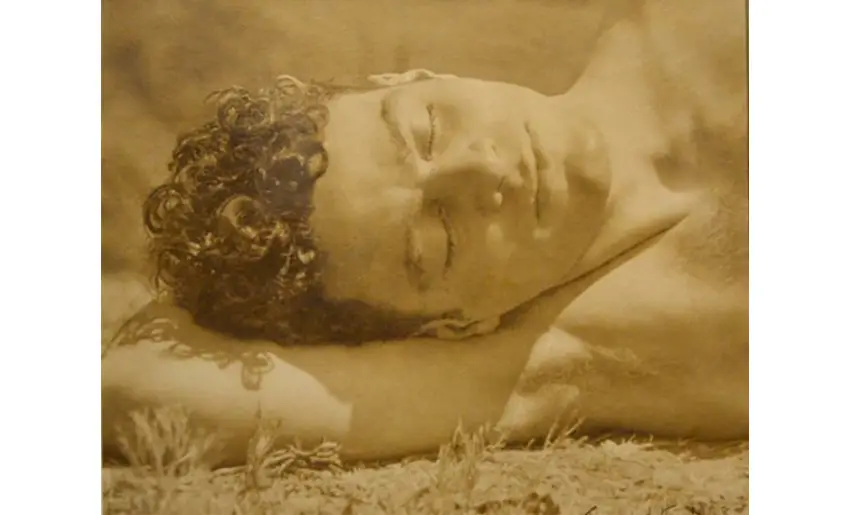
“Today is a day we shouldn’t forget,” Juan told his grandson Alejandro, as the boy listened attentively, sitting on the floor next to his chair: “Many, many years ago, when the January cold gripped even distant lands, a young man, almost a boy like you, fell in a street in Mexico.
His name was Julio Antonio Mella. You and I have been reading about him these past few days, and I want to tell you how I remember him, because his story isn’t just from books: it’s real, like ours.”
“And did you know him, Grandpa?” Alejandro asked, interrupting gently.
“No, I didn’t. But I felt very close to him,” the grandfather replied, and continued, “I was younger than you when I first heard his name, whispered like an important secret. My grandfather, your great-grandfather, told me about him. ‘Mella was a hurricane,’ he said. Not because he destroyed, but because he wanted to cleanse everything that was rotten.”
He was born at the turn of the century and, from a young age at university, realized that knowledge was useless if it remained locked within walls. That’s why he founded the FEU (Federation of University Students), to unite students, and the José Martí Popular University, to bring that knowledge to the workers who hadn’t had the opportunity to study. He had one fixed idea: Cuba had to be truly free. Without dictators bleeding it dry and without outsiders running it like a private estate.
For thinking this way, for speaking it loud and clear, he earned the hatred of the strongman of the time, Machado. He was imprisoned, but he—with a courage that still moves me today—declared a hunger strike. He didn’t eat, so that his body would also be a form of protest. People began to clamor for him, and the tyrant, frightened, let him go into exile. He went to Mexico, but he didn’t remain silent. There he continued fighting, making friends among those who dreamed of a better America.
And then this day arrived, January 10th, 1929: a dark night in Mexico City. He was walking arm in arm with his partner, Tina Modotti, when the shots rang out. He fell to the ground, mortally wounded.
“Only twenty-five years old…” Alejandro murmured, his genuine sorrow momentarily halting the story.
“Yes, my son. Only twenty-five years old,” Juan agreed. “The news crossed the sea like a lament and reached here in Cuba. My grandfather wept with rage that day. They weren’t just killing a man: they were trying to kill an idea.”
Now you and I have read about him together, and you ask me why he is important. He is important because Mella teaches us that youth is not a time for waiting. Also he didn’t wait to be “someone” to act. With what he had—his ideas and his courage—he stood up. He teaches us that learning is not meant to be kept to yourself, but to be shared and used to do good. And, above all, it shows us that love for one’s country isn’t just about saying nice things. It’s about working and, sometimes, risking everything for it.
That’s why, every time a young person like you gets up to defend what’s right, to study, to look around and want to improve things… Mella is there. He didn’t die on that street: he multiplied. In you, in your classmates, in everyone who believes a better world is possible and isn’t afraid to start building it.

- New Holguin schoolchildren join the OPJM (+ Photos) - 8 de October de 2026
- Innovating in Cuba: the talent that produces, saves, and solves - 7 de October de 2026
- Cuban Deputy Prime Minister Assesses Water Availability in Holguin - 2 de October de 2026