
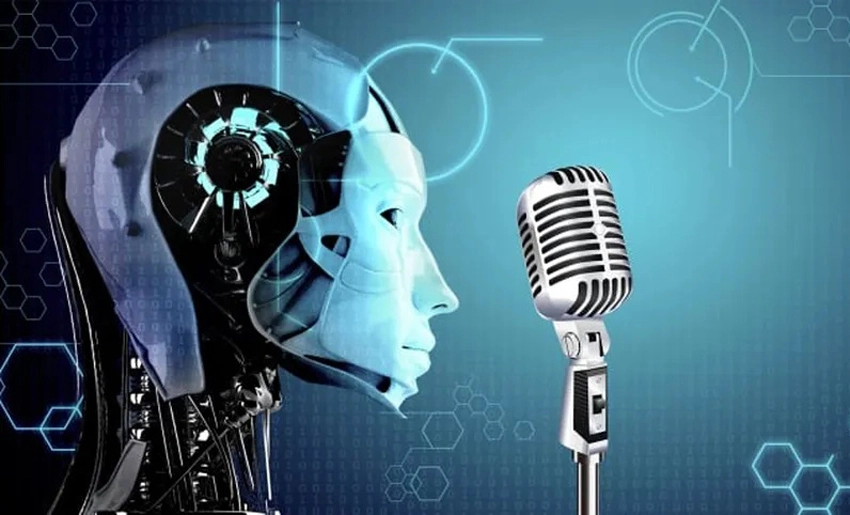
In Cuban newsrooms, where the rustle of paper coexists with the silent flow of digital data. A quiet transformation seeks to redefine the heart of journalism. It’s not just about adopting new tools, but about an urgent reconversion that views Artificial Intelligence (AI) as a complex allí. An opportunity to enhance human creativity in a scenario marked by material limitations and a constant brain drain.
This report, based on the testimonies of journalists, managers, and academics, explores the challenges and human potential behind digitization as presented in the Cuban press.
Cuban public media face a historic crossroads: they have lost informational prominence and agility in the face of the torrent of content on social media and digital platforms. A recent survey of global media leaders reflects a mirror in which Cuba can see itself. Only 40% are confident in the future of journalism. But more than half (56%) are optimistic about the business, betting on quality and trust as a sure value.
In Cuba, the institutional response to this challenge is the Editorial, Economic, and Technological Transformation process driven by the Union of Journalists of Cuba (UPEC). However, the path is fraught with structural obstacles. “We have a major handicap: the lack of all essential human resources. Not only journalists, but also designers, IT specialists, communications professionals…,” acknowledges an analysis published in Cubadebate. This deficit coexists with another paralyzing phenomenon: the departure of the best-prepared professionals to other sectors once they reach a desirable level of competence.
AI in the Newsroom: Substitute or Collaborator?
The adoption of Artificial Intelligence tools is not a futuristic fantasy, but a developing practice. More than thirty journalists from ten provinces recently participated in the second Artificial Intelligence and Communication Course at the José Martí International Institute of Journalism. A program that combined ethics and practice.
Also the consensus among specialists is clear: AI should be an amplifier of human capabilities, not a replacement. Globally, 96% of media executives see automating back-end tasks—repetitive and complex processes—as crucial to reducing errors and freeing up journalists for creative and analytical work. In Cuba, this vision is beginning to be implemented.
To this end, practical applications already underway must be considered. These include automation and verification: the use of software for systematic tasks and to assist in verifying data and content. Data journalism, one of the tools for analyzing large volumes of information, is hampered by the near absence of open-access official databases. Of course, by the new formats used for text-to-audio conversión. Automated summary generation, and translation support.
“Artificial intelligence is a reality we are already experiencing every day. Its impact on content creation… has been extraordinary. This course is vital for Cuban journalists to be able to take advantage of its potential,” says Adrialis Rosario Zapata, from the Girón newspaper in Matanzas.
Talent: The Human Crisis Behind the Technological Challenge
The most advanced technology is useless without people who know how to manage it with journalistic judgment. The problem of human resources is the most pressing. As journalist Abel Falcón pointed out at the 10th Congress of the UPEC (Union of Cuban Journalists), there is a “deprofessionalization” driven by a lack of incentives and fatigue. Which drives recent graduates away from public media.
Innovative organizational models, such as that of the digital media outlet Cubahora, attempt to break this inertia. They operate with an interdisciplinary core team (journalists, communicators, designers, sociologists) that plans with the web and the audience in mind first. This model serves as a benchmark, but it too suffers the same attrition. “Just when we’ve managed to advance in professional development… the most qualified leave.”
Continuing education is the other pillar of the strategy. Ileana González López, acting director of the José Martí Institute, emphasizes: “It’s essential to continue creating opportunities for professional development. Because artificial intelligence is constantly evolving.” The president of the UPEC (Union of Cuban Journalists), Ricardo Ronquillo Bello, has called for the knowledge acquired in these courses to be replicated throughout the country.
The digital transformation of the Cuban press, with AI as a central component, is a process fraught with challenges. On the one hand, it offers powerful tools to increase efficiency. Also to reconnect with younger audiences through new formats, and delve deeper into analysis. On the other, it clashes with a crisis of talent and material resources that cannot be resolved with software alone.
Moreover the success of this transition will not be measured by the number of algorithms implemented, but by the ability to put technology at the service of a more profound, truthful, and useful journalism for society. As Professor Yarina Amoroso Fernández summarizes, it is about mastering these tools without losing sight of the ethical foundations of the profession. The future of Cuban journalism, which aspires to remain. Above all, an essential voice for its people, hinges on this delicate balance between technological innovation and human principles.
Sources: This report is based on official Cuban sources such as Cubadebate and the UPEC (Union of Cuban Journalists), information from the AI course at the José Martí Institute, and statements from professionals such as Vicente Manuel Prieto and Ricardo Ronquillo Bello. It includes global statistics cited by these sources. The methodology consisted of collecting, verifying, and contextualizing this public data within the Cuban media regulatory framework.
By: Daimy Peña Guillén

- 7.6-Magnitude Earthquake Shakes Panama - 10 de October de 2026
- Etecsa completes work to modify its energy mix in Antilla - 10 de October de 2026
- Cooking with charcoal and firewood: the visible face of the energy blockade - 10 de October de 2026