
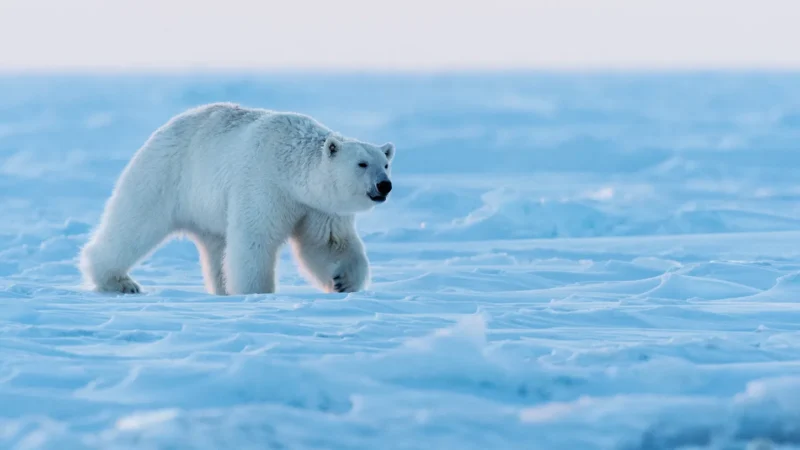
A subgroup of polar bears in southeastern Greenland is modifying its DNA to survive as its habitat warms. According to a study from the University of East Anglia in the UK.
The study analyzed blood samples taken from polar bears in northeastern (12 bears) and southeastern (five bears) Greenland to compare the activity of so-called “jumping genes” (small, mobile parts of the genome that can influence the function of other genes). Their relationship to temperatures in the two regions, and the associated changes in gene expression.
According to scientists, while temperatures in northeastern Greenland were colder and less variable, the environment in the southeast was significantly warmer and less icy. Creating many challenges and changes for the habitat there, similar to the future conditions predicted for the species.
Experts discovered that some genes related to heat stress, aging, and metabolism behaved differently in polar bears living in southeastern Greenland.
They also found changes in gene expression areas of DNA related to fat processing, which is important when food is scarce.
Also this could indicate that the bears in the southeast are slowly adapting to the coarser plant diets found in warmer regions. Compared to the primarily fat-based, seal-based diets of the northern population.
“We identified several critical genetic hotspots where these jumping genes were highly active. Some of them located in protein-coding regions of the genome,” said Dr. Alice Godden, from the School of Biological Sciences at the University of East Anglia. This suggests that the bears are undergoing quick and fundamental genetic changes. As they adapt to their disappearing sea ice habitat.
The current research builds on a previous study by the University of Washington. Which found that the southeastern population of Greenland polar bears is genetically different from the northeastern group, having separated some 200 years ago.
More than two-thirds of polar bears are projected to be extinct by 2050. With total extinction expected by the end of this century.
Futhermore the Arctic Ocean is also at its warmest point on record, with temperatures continuing to rise. Which is shrinking the vital sea ice platforms that the bears use to hunt seals, leading to isolation and food shortages.
With information from Prensa Latina

- Putin states that BRICS has generated over 40 percent of global GDP - 12 de September de 2026
- Between the wind of the tenths and bottled art - 12 de September de 2026
- ETECSA Holguin Hosts Science and Technology Forum - 12 de September de 2026