
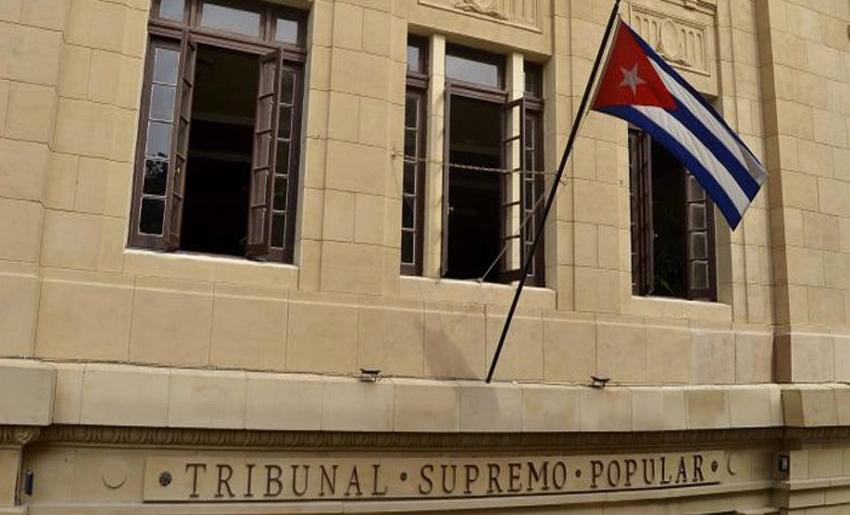
The Supreme People’s Court sentenced Alejandro Gil Fernández to life imprisonment plus 20 years for espionage, bribery, damage to classified documents, and other crimes against state security and the national economy.
The oral hearings took place between November 11th and 13th, and from November 26th to 29th. In strict compliance with the procedural rights recognized in the Constitution of the Republic and the Law of Criminal Procedure. As acknowledged by both the defendant and his defense.
In the first case, Gil Fernández—who served as Deputy Prime Minister and Minister of Economy and Planning—was found guilty of espionage, acts detrimental to economic activity, bribery, theft and damage to documents in official custody, violation of official seals, and breach of regulations protecting classified information, the latter crimes being committed repeatedly.
According to the Supreme People’s Court, the gravity of the crimes. Especially the delivery of classified information to foreign intelligence services warranted the maximum sentence: life imprisonment.
In the second trial, he was found guilty of continuous bribery as a means to falsify public documents, influence peddling, and continuous tax evasión. For which he received a 20-year prison sentence.
In both cases, the Court imposed additional penalties. Including the confiscation of assets, a permanent ban on holding positions involving the administration of human, material, or financial resources, and the deprivation of public rights.
The ruling emphasizes that the defendant, through “corrupt and deceitful” actions, used his institutional responsibilities to obtain personal benefits. Receive money from foreign companies, bribe other officials, and legitimize the irregular acquisition of assets.
His conduct, the statement noted, caused damage to the national economy and constituted treason against the nation. Defined in Article 4 of the Constitution as “the most serious of crimes.”
The Court based the sanctions on Articles 147 of the Constitution and 71.1 and 29 of the Penal Code. Taking into account the high social harm caused by the acts and the “ethical, moral, and political degradation” demonstrated by the accused.
It was also emphasized that his actions violated international commitments undertaken by Cuba. Particularly the United Nations Convention against Corruption.
Both the Prosecutor’s Office and the accused have 10 business days to file the appeals provided for by law. In the case of the life sentence, the Court will initiate an appeal process ex officio. As an additional guarantee established in procedural law.
Once all appeals have been resolved, and if the convictions are upheld, a single, joint sentence will be applied in accordance with Article 86 of the current Penal Code.
With information from Prensa Latina

- Putin states that BRICS has generated over 40 percent of global GDP - 12 de September de 2026
- Between the wind of the tenths and bottled art - 12 de September de 2026
- ETECSA Holguin Hosts Science and Technology Forum - 12 de September de 2026