
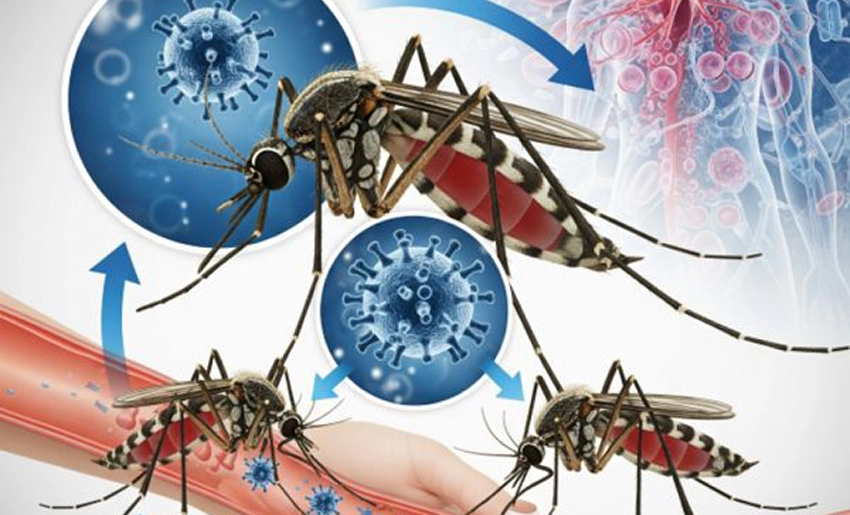
Specialists from the Pedro Kourí Institute of Tropical Medicine (IPK) reported on the evolution of arboviruses in Cuba during the television program Mesa Redonda. With an emphasis on the impact of chikungunya and the need to strengthen epidemiological surveillance.
María Eugenia Toledo Romaní, PhD and researcher at the IPK, stated that chikungunya can be fatal and specified that long-term forecasts are not possible in Cuba, as this is the first epidemic.
The expert explained that, unlike dengue, which has an endemic-epidemic pattern. Chikungunya only allows for short-term forecasts. She noted that between 2020 and 2024, more than 119 countries reported outbreaks, including recent cases in France and Réunion Island.
She pointed out that the Cuban population is highly susceptible due to a lack of prior exposure to respiratory emergencies. With attack rates between 30 and 70 percent. In addition to an aging population and internal and international mobility that facilitate transmission.
Toledo Romaní indicated that control strategies, such as fumigation, are not entirely effective and face socioeconomic and environmental constraints. She added that the increase in cases since week 40 coincided with the start of the school year and the concentration of people in infested areas.
María Guadalupe Guzmán Tirado, head of the Diagnostic Center at the IPK (Pedro Kourí Institute of Tropical Medicine), explained that 17 respiratory viruses are circulating in Cuba and detailed the coordination of the Microbiology Laboratory Network under the Ministry of Public Health, with the IPK serving as the National Reference Laboratory.
Guzmán Tirado noted that the IPK has 23 laboratories accredited by the WHO/PAHO and has responded to epidemics ranging from dengue in 1977 to the detection of chikungunya in 2025. Solidifying its strategic role in the surveillance and control of communicable diseases.
Yamirka Montesinos Felipe, head of the national pediatric intensive care group, stated that newborns and infants under one year old are the most affected by severe forms of chikungunya. Also with vesicular-bullous lesions and intestinal dysfunction requiring specialized care.
Moreover the specialist indicated that all children under two years old and older children with warning signs, comorbidities, or social vulnerability are admitted. Recommended that parents seek medical attention for fever and maintain preventive measures such as the use of mosquito nets.
Daniel González Rubio, an infectious disease specialist at the IPK explained that the disease progresses through acute, post-acute, and chronic phases. So with joint manifestations that can be debilitating. He warned about the impact on the elderly population and the need for specialized care.
Experts agreed on the importance of early warning, timely diagnosis, and systematic surveillance to combat the epidemic. As well as the active participation of the population in environmental hygiene and prevention efforts.
With information from CNA

- U.S. Dermatologists Develop an Oral Pill for Hair Loss in Men - 21 de October de 2026
- Cuban Foreign Minister Denounces U.S. Pressure Regarding Votes Against the Blockade - 21 de October de 2026
- Second Phase of the “Sowing Life” Project Launched in Holguin in Cooperation with Mexico - 21 de October de 2026