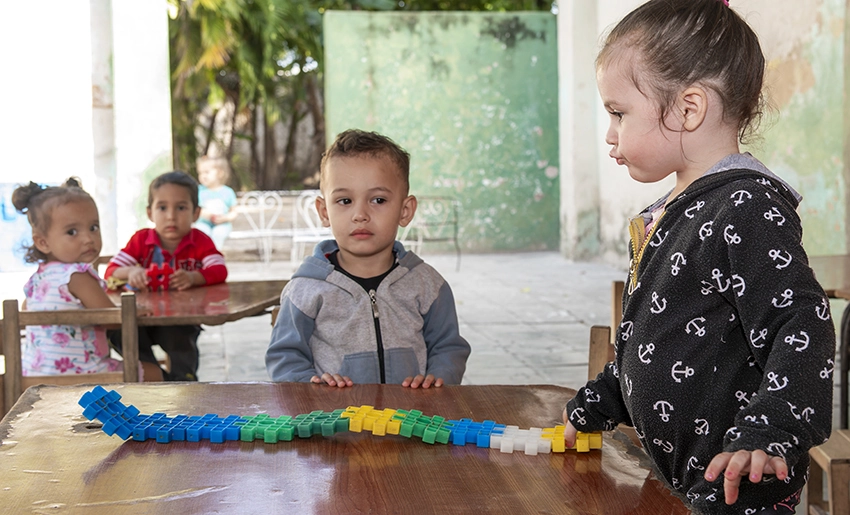
Most Cubans share a common memory of their early years in Children’s Circles: playtime with friends, the care of the teachers, and first lessons like sharing toys or washing hands before snack time. That stage, which seems simple, was actually the foundation of our future development.
Within those colorful walls, we learned rules of coexistence, routines, and values that later, as professionals in Medicine, Education, or Science, became work habits and a sense of responsibility. What seemed like just games and songs transformed. Without our realizing it, into the foundation of our adult lives.
Thus, Children’s Circles in Cuba were created on April 10th, 1961. An idea championed by Vilma Espín and supported from the beginning by Fidel Castro. The goal was to care for the children of working mothers, who began entering the workforce en masse after the Triumph of the Revolution.
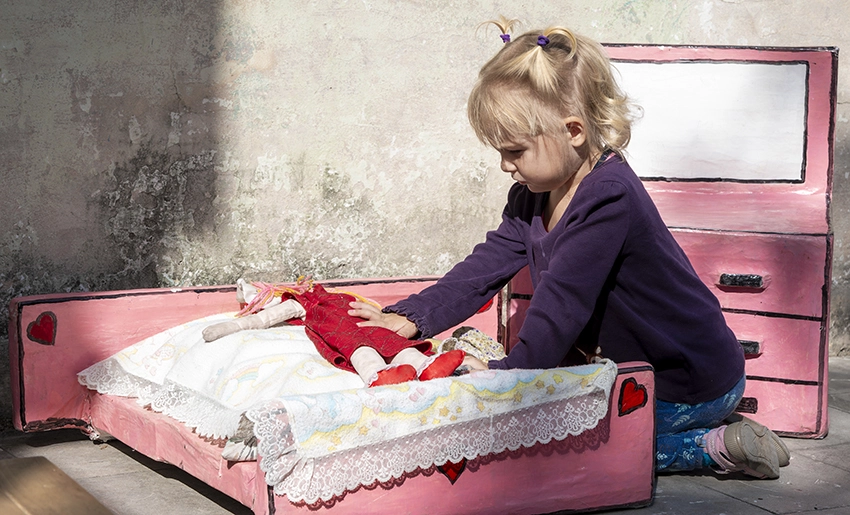
Photo: Kevin Manuel Noya/Radio Angulo
From their inception, these centers had a clear purpose: to combine care with education. It wasn’t just about feeding and supervising the children, but about stimulating their intellectual, motor, and emotional development from the first months of life. To this end, educational programs were designed, suitable facilities were built. And specialized staff were trained: educators, assistants, and healthcare personnel.
As for the achievements, they have been sustained and measurable. Currently, there are more than a thousand childcare centers throughout the country, from cities to rural communities. These institutions have allowed hundreds of thousands of mothers to study or work with peace of mind.
Moreover the children who attend arrive at primary school with better social skills, a larger vocabulary, and established routines. Which facilitates their academic performance. Cuba has also developed the “Educate Your Child” program, unique in the world and recognized by UNICEF. Also which has been adopted by other Latin American countries, such as Ecuador, Mexico, Brazil, and Colombia.
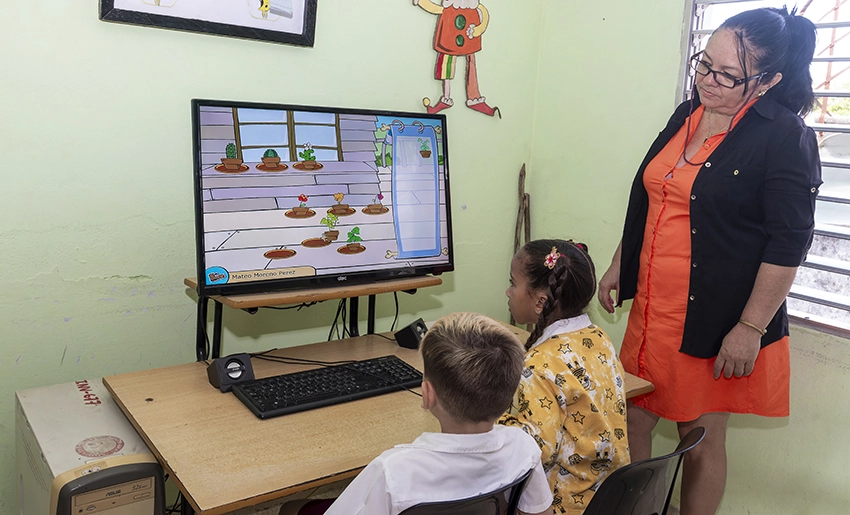
Photo: Kevin Manuel Noya/Radio Angulo
But perhaps the greatest achievement is values education. Fidel Castro summarized it this way at the Children’s Day event in 1974: “We must think about the future; and the future is you. In you is embodied the future of our homeland.” This idea, that children are not just another recipient of policies, but the future incarnate, has sustained this work throughout these years.
As this anniversary draws to a close, childcare centers have multiplied and improved. Although they now face difficulties due to the intensification of the economic blockade. Which affects everything from the acquisition of toys to educational materials, their social function remains key. The educators, trained in teacher training colleges. Maintain their commitment to supporting the growth of the youngest children.
Childcare centers remain a cornerstone for Cuban families and a testament to the fact that early childhood education. When public, free, and accessible, benefits all of society. Because what a child learns at that young age—to share, to respect, to ask questions—is never forgotten. And that, to a great extent, is thanks to those teachers and a project that has been sowing the seeds of the future for 65 years.

- Children’s Circles, 65 Years Sowing the Future (+ Photos) - 10 de April de 2026
- Holguin hosts national activities for the 65th anniversary of the Children’s Circles - 28 de March de 2026
- The Value of Learning in the Face of Adversity - 23 de March de 2026