
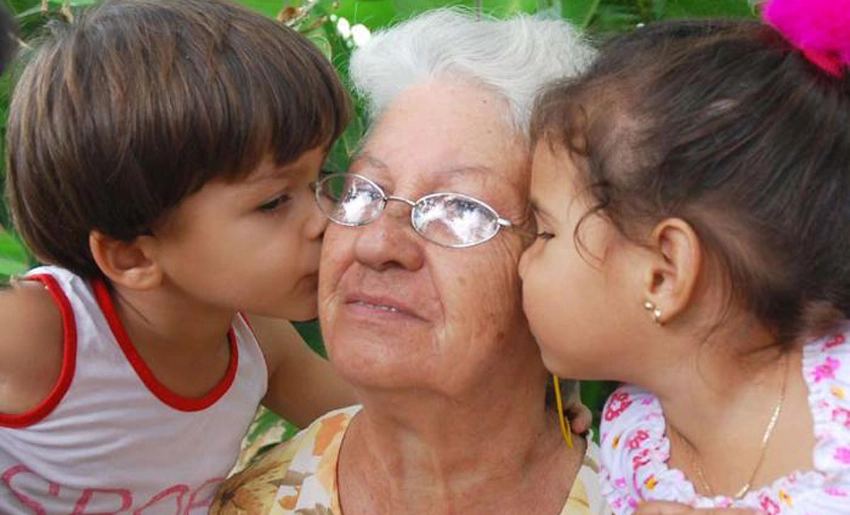
In Cuban society, where the Revolution placed social justice and the care of the most vulnerable at the heart of its human project. It is paradoxical and painful to observe how, in the daily life of Holguin, one of the most fundamental virtues. Sensitivity towards our elderly—has been eroding. This is not an isolated incident, but rather a behavior that deserves profound analysis. As it speaks volumes about us as a nation and as human beings.
Anyone who walks through the lines at a bodega, a pharmacy, or a market in the city of parks can witness a recurring scene. An elderly man or woman, with slow steps and a hunched posture. Waiting their turn while all around them the law of haste, pushing, or indifferent silence prevails.
Courtesy, which in other times was a hallmark of Cuban identity, seems to have been lost. No one gives way, no one offers a seat, no one speeds up procedures. So that someone who can barely stand can get home sooner. Worse still: when a disoriented elderly person asks for directions or a service. They often encounter averted glances or curt responses. We don’t help. And this lack of help is more than just discourtesy: it’s a wound in the moral fabric of the community.
But this phenomenon doesn’t occur in a vacuum. It has deep roots in a social phenomenon that Cuban journalism cannot ignore: migration. In Holguin, as in other provinces of the country, hundreds of families have watched their children, grandchildren, or nephews emigrate in search of better economic opportunities. The result is a generation of elderly adults left alone, without direct family support. Not because their relatives don’t love them, but because material conditions force separation. The loneliness of these elderly people is not just a personal tragedy. It’s a matter of social policy and, also, of collective conscience.
Faced with this reality, we must ask ourselves: what role do we play as a society? The Cuban state, through the Ministry of Public Health (MINSAP), Social Assistance, and senior citizen groups, provides a system of protection. But no system, however advanced, can replace human warmth, a watchful eye, a gesture of solidarity in a queue. Or a kind word to a lost elderly person. Sensitivity cannot be decreed: it is cultivated at home, at school, in the neighborhood.
The call, therefore, is for collective reflection. We cannot allow daily stress or despair to make us insensitive. Our elders are not a burden: they are the living memory of the nation. Those who forged, through their efforts, the Cuba we have today. Helping a disoriented elderly person, giving them priority in a queue. Or simply asking how they are is an act of human resilience and a reaffirmation of our most genuine values.
Holguin, a city of culture and traditions, cannot look the other way. Gratitude is shown, above all, when it hurts to do so. And today, in every line and on every street corner, it hurts to see indifference. Let’s replace that hurt with a hug.
By: Daimy Peña Guillén

- Urban Transportation Services Reactivated in Holguin - 8 de April de 2026
- Gratitude Towards the Elderly: A Challenge of Sensitivity - 8 de April de 2026
- Academy in Holguin Contributes to the Training of Artisans - 7 de April de 2026