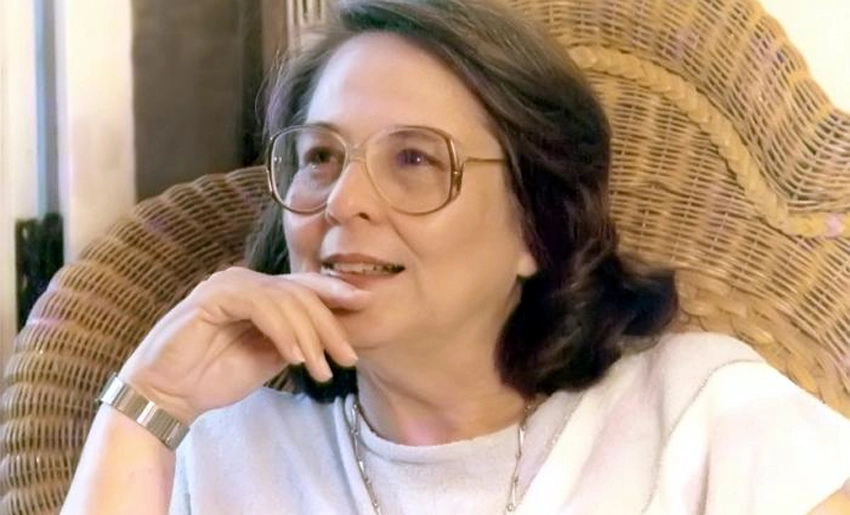
The wind that blows from Loma de la Cruz carries not only the scent of Atlantic salt air. It carries with it the murmur of denim skirts and militia boots. To understand Vilma Espín Guillois’s legacy in Cuban women. One must walk the cobblestone streets of Holguin and look into the eyes of those. Who, six decades ago, traded the hearth for the school desk and the hoe for the right to choose.
In the 1960s, in the intricate landscapes of Mayari and Sagua de Tanamo, being a woman was a destiny marked by silence and obligatory motherhood. But Vilma, with her soprano’s sweetness and steely resolve. Came to these eastern lands not to impose, but to found.
The creation of the Federation of Cuban Women (FMC) in 1960 found fertile ground, yet also hostile, in Holguin. It was here that the first delegations had to convince husbands that studying did not diminish their “decency.” And that working outside the home was true freedom.
Women from Holguin are distinguished by a blend of academic tenacity and everyday resilience. At the Center for Research and Rehabilitation of Hereditary Ataxias (CIRAH), a world-renowned institution located in Holguin. So the white coats are worn predominantly by women who embody the technical advancement that Vilma so strongly championed.
In the cooperatives of Gibara, it is not uncommon to see women managing tobacco or agricultural production. Shattering the myth that the countryside is “a man’s world.” The teaching profession in the province continues to be predominantly female. Keeping alive the literacy campaign that Vilma championed as the first great gateway to emancipation.
If anything defines Vilma’s impact on the women of this eastern region. It is the normalization of rights that were previously unthinkable. The Family Code, whose foundations she laid through decades of struggle for gender equality and respect for diversity. It resonates with particular force in Holguin homes. Vilma taught that femininity was not incompatible with either the rifle or engineering.
In Holguin, a province with strong traditions, her legacy was the bridge between the conservatism of yesteryear and the modernity of a woman who today leads universities, hospitals, and homes.
As evening falls in Calixto García Park, young university students can be seen walking with the confidence of those who know they are masters of their own destiny. Perhaps many are unaware that every step they take on those flagstones was paved by the audacity of that young woman from Santiago who made all of Cuba her home. In Holguin, Vilma Espín is not just a name on a plaque. She is the standard of dignity passed down from grandmothers to granddaughters. She is the certainty that, on this island, the future is written with a woman’s name.
Her memory is not a bronze statue viewed from afar: it is a shared heartbeat that resonates in every Holguin home where a woman decided to take ownership of her life.
Vilma Espín lives on because she knew how to love Cuban women not as an abstract ideal. As sisters in the trenches, with their weariness, their joys, and their boundless resilience.
That is why, when the northeast wind shakes the royal palms of the Pearl of Cuba. The women of Holguin hold their heads high: they know they carry within them the seed she planted. And that this land, watered with courage and tenderness, will never cease to bear fruit.
By: Daimy Peña Guillén

- Vilma, the Echo of a Guerrilla Fighter in Holguin - 7 de April de 2026
- Transportation for Medical Personnel and Patients Strengthened in Holguin - 7 de April de 2026
- University of Holguin leave off International Events for 2026 - 7 de April de 2026