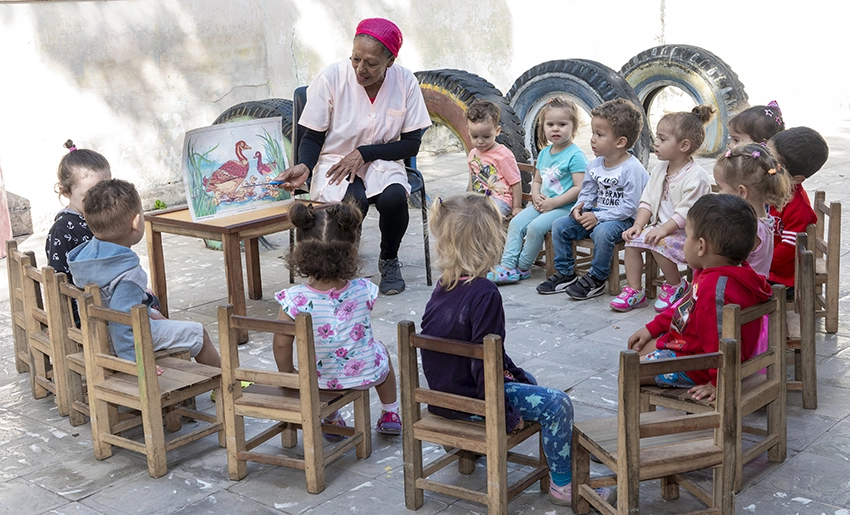
The province of Holguin stands out as a national leader in early childhood care. After achieving full coverage of pending applications for childcare centers. As a result, it will host the national event commemorating the 65th anniversary of these centers on April 10th.
With an enrollment of over eight thousand children from first to sixth year old. Early childhood education in the northeastern province is distributed across a network that includes 65 childcare centers and 24 “casitas” (small houses for children). Yaima Cruz de la Cruz, head of the department at the General Directorate of the sector, told the Cuban News Agency.
Among the merits that led to the selection were meeting the social demand for childcare spaces for working mothers. And the progress in the program to build “casitas” in entities across various sectors of production and services, she emphasized.
Other achievements resulted from the development of high-quality learning materials. The implementation of nationally impactful research projects that strengthened comprehensive education from an early age, she explained.
Currently, the province leads two fundamental lines of study encompassing inclusive teaching through integrated training. Also the analysis of the pedagogical vision of the historical leader of the Cuban Revolution, Fidel Castro, a program directed by the Ministry of Education.
Cruz de la Cruz noted that this research addressed issues of cultural decolonization with children and educators from the Que siempre brille el sol (The Sun Always Shine) institution in the provincial capital. Los Rebelditos (The Little Rebels) in Sagua de Tanamo; and Sueños de Birán (Dreams of Birán) in Cueto.
Founded at the initiative of Fidel Castro and Vilma Espín Guillois. Early childhood education in Holguin reaffirms its commitment to responding to the needs of working families, efficient resource management, and the professional development of its staff.
With information from CNA

- Rural communities in Holguin benefit from new solar kits - 30 de March de 2026
- Powerful solar eruption reported, according to Russian scientists - 30 de March de 2026
- Early Childhood Care in Holguin Among the Best in Cuba - 30 de March de 2026