
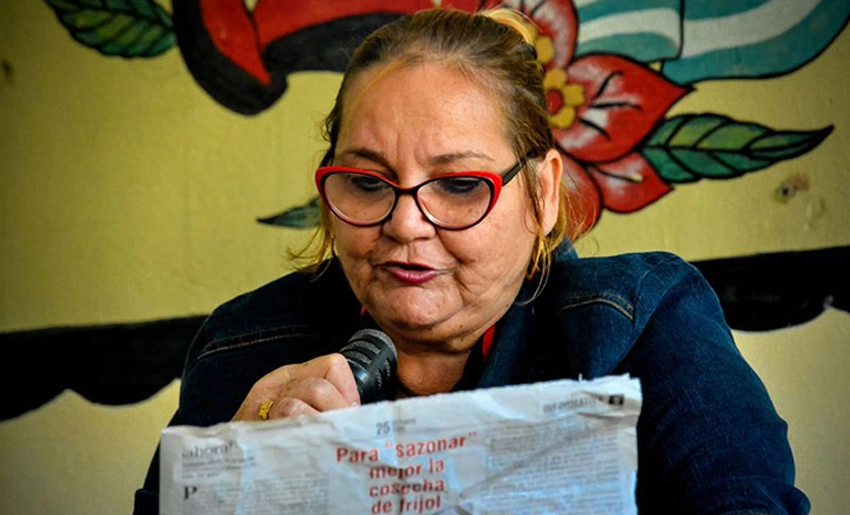
Motivated by her love of literature, Daine Castro Fernández decided to leave behind her studies in Mechanical Engineering. And take on the role of tobacco factory reader at the Jesús Feliú Leyva Tobacco Factory in the city of Holguin.
Initially, she worked at the factory as head of traffic. Handling supplies and transportation. She soon left this position due to her passion for books and her deep desire to share knowledge. Reasons that now fill her with pride after 20 years dedicated to a professional life that blends art and tradition.
The experience has shaped a challenging profession. Requiring not only good diction but also skills in public speaking, including pauses and intonation. These are aspects she learned through study and constant preparation. As they are essential when communicating remotely.
Also the main goal is to deliver the message to the workers. While reading, they remain focused on their work. Adjusting the pace, tone, and selection of texts to ensure the information is clear, engaging, and relevant. Amidst the busy production environment, she explained.
She affirms that her role requires broad general knowledge and ongoing preparation to select. Along with representatives from all branches of the organization, the topics to be shared. The selection emphasizes anniversaries and significant events of the month. Drawn from articles in the provincial and national press.
Tradition is often affected in a context marked by new information technologies. However, this work remains relevant due to its human value and its connection to promoting culture, because Daine is convinced that reading also transforms one both professionally and personally.
For those who dedicate long hours focused at their desks, the value of this activity goes beyond simply reading in a classroom. It represents the precise combination of knowledge appreciated through the voice of someone who knows how to select and discuss any topic. The day includes musical performances, large-scale technical training sessions, congratulations, and guidance. Making the voice the common thread in the center’s internal life and reinforcing the integrative nature of its function.
Scholars recognize that the cigar factory reader originated in Havana during the second half of the 19th century. Also becoming institutionalized in 1865. This practice spread to other regions and became a symbol of Cuban identity and a legacy of the tobacco sector’s independence struggles.
With information from CNA

- Tobacco Factory Reader: A Tradition That Endures - 23 de March de 2026
- Holguin Promotes Crafts with Recycled Materials - 23 de March de 2026
- Trump Threatens to Destroy Iranian Power Plants - 23 de March de 2026