
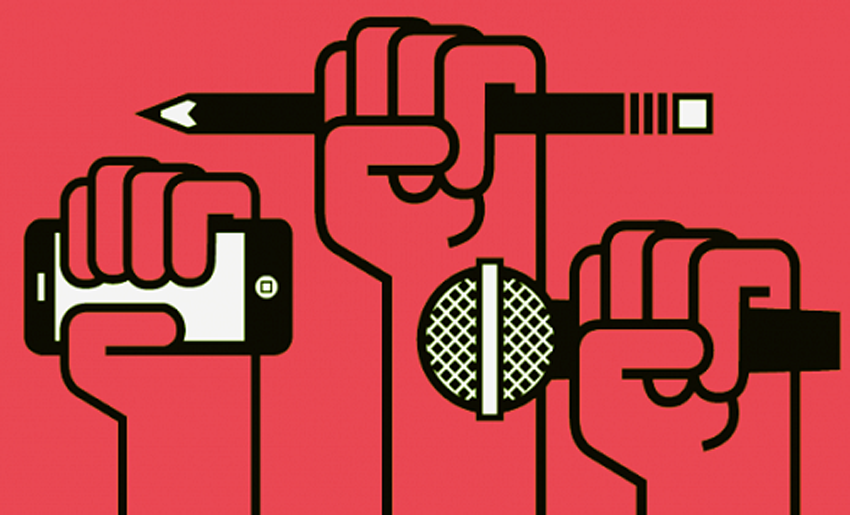
In today’s digital ecosystem, it seems the press card has been replaced by a smartphone with data and a Facebook or other social media account. We are frequently told that immediacy has killed reflection and that any bystander at the scene of an event is now a communicator. If we add to this the rise of Artificial Intelligence (AI). Capable of producing news reports and videos in seconds, the question becomes unavoidable: What purpose do journalists serve today?
The answer lies not in speed, but in ethics and purpose. Social media doesn’t inform; it exposes. The algorithm doesn’t seek the truth; it seeks engagement. A viral video can show an event in real time, but it lacks the investigation that explains its causes.
An AI can write a grammatically perfect text, but it has no conscience and cannot be held legally or morally responsible for what it writes.
Professional journalism is the antidote to information overload. We are the ones who verify, who cross-check sources. And who put our faces—and our bylines—behind every word. In a world of half-truths, journalists remain the necessary filter to prevent noise from becoming law.
Why are we indispensable in Cuba?
While the challenge is global, in the Cuban context our work takes on the character of a symbolic trench. We are not journalists in a bubble. We are communicators in a country under constant media siege.
Cuba is the largest disinformation operations laboratory in the region. Cuban journalists are today the shield against fake news that attempts to generate chaos and social division.
Our press has the ethical mandate to be the channel for the people’s concerns. Beyond the news itself, Cuban journalists must be the analysts who question, who touch the heart of the community, and who demand answers from those who manage public affairs.
AI doesn’t know the story of a family in a remote corner of Holguin’s Turquino Plan, nor does it understand the sacrifice of a scientist at the Biopharmaceutical Hub. We do. Cuban journalism is written with sensitivity, ideology, and the commitment that every word contributes to improving our society.
We are not data collectors; we are interpreters of reality. Journalism is not just a profession; it is a public service. Neither the most sophisticated algorithm nor the fastest social network can replace the critical eye of a professional committed to their people.
In this era of digital illusions, our greatest asset is precisely to remain human. To remain in the streets, and to continue defending the truth about Cuba with the rigor that only ethical commitment provides.
This is an opportune moment to incorporate this recognition. Especially given the symbolic weight of March 14th, the date on which José Martí founded the newspaper Patria.
It is no coincidence that we celebrate our day every March 14th. On the anniversary of José Martí’s founding of the newspaper Patria. Cuban journalism today looks to its reflection as a model of ethics and literary elegance. Amidst a landscape of unconventional warfare and digital siege. Cuban journalists celebrate not only a profession, but a legacy of resistance.
Martí taught us that “the newspaper is a sentinel”. Today, that sentinel not only watches over the news, but also protects the truth of a nation that refuses to be told by external algorithms or spurious interests. To be a journalist in Cuba today is, above all, an act of fidelity to that Martí legacy of uniting and loving, of informing to liberate.
By: Daimy Peña Guillén

- Taymara Oropesa advances to semifinals of the Badminton Tournament - 14 de March de 2026
- The Journalist, That “Uncomfortable” Guardian of Truth in the Age of Algorithms - 14 de March de 2026
- Cuba Celebrates Press Day - 14 de March de 2026