
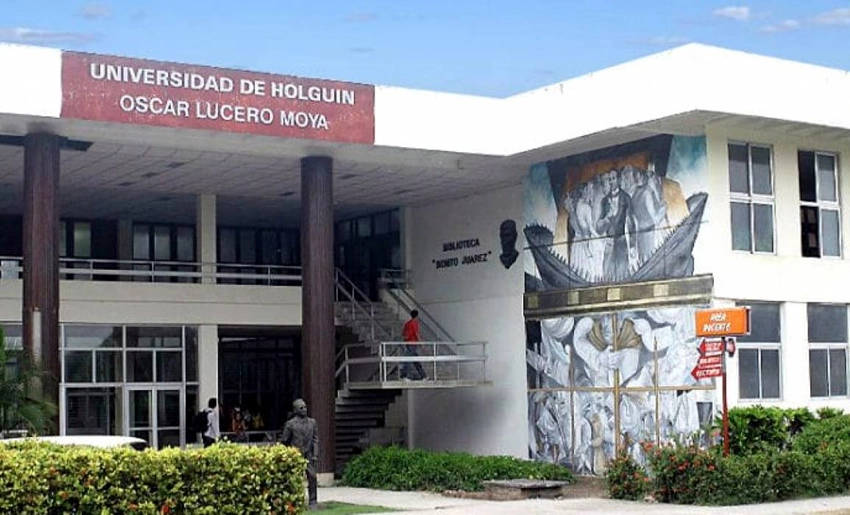
The University of Holguin (UHo) has become the epicenter of an ambitious academic and social transformation. With funding from the Flemish Inter-University Council (VLIR UOS) of Belgium and academic coordination from the prestigious KU Leuven. The Cuban university is leading the development of the CRISSS project (Capacity Building for Research and Innovation at the University of Holguin). A strategic initiative with a decade-long vision that promises to revolutionize eastern Cuba.
The program, titled “Accelerating National Development through Intelligent Service Solutions Engineering.” Aims to transform Holguin into a resilient, self-sustaining, and smart region. To achieve this, it will focus on addressing critical challenges in the province in vital sectors. Such as energy, water supply, food sovereignty, and urban governance. The key will be the application of innovative software and advanced technologies that enable the creation of solutions tailored to local needs.
According to sources at the academic institution, the implementation of the first five-year phase of the CRISSS project is scheduled to begin in September 2026. This roadmap was solidified following the recent conclusion in Brussels of the launch event for the cooperation cycle. Also where Cuba was among the six nations selected for this stage. A delegation from the University of Honolulu (UHo), headed by its rector, Aniuska Ortiz. Actively participated in the working sessions in Belgium. Where the project was officially presented to the European academic community.
A cross-cutting and perhaps the most significant component of this initiative is the creation of a Doctoral School in Engineering at UHo. This center will not only strengthen local research capacity but will also have the mission of training high-level specialists. Capable of generating interdisciplinary solutions to the demands of the regional socioeconomic environment. Professor Ann Nowe, from the Vrije Universiteit Brussel (VUB). She will be one of the academic leaders in this effort to establish joint doctoral programs and high-impact initiatives.
The Belgian consortium supporting the University of Holguin is top-tier. In addition to KU Leuven, the Vrije Universiteit Brussel, Hasselt University, and Ghent University are also participating. This network ensures a scientific exchange of global standard and opens doors for Cuban researchers to access cutting-edge laboratories. Such as the VUB’s artificial intelligence “living lab,” where intelligent systems are being explored that could have direct applications to address Holguin’s challenges.
With the consolidation of the CRISSS project and this network of international alliances, the University of Holguin is making a firm commitment to human capital development and technological sovereignty. These pillars are considered fundamental tools for autonomously addressing the challenges of sustainable development in the region.
International cooperation thus transcends mere academic exchange and becomes a driver of tangible change. The creation of a software factory, the development of smart agriculture. And the implementation of digital governance systems are just some of the facets of a project. That, in a decade, could completely redefine the face of Holguin and serve as a model for other regions of Cuba.
By: Daimy Peña Guillén

- UHo Leads Academic Cooperation Project with Belgium - 9 de March de 2026
- Cuba faced its fifth driest year since 1901 in 2025 - 9 de March de 2026
- Mukhtaba Khamenei: Iran’s New Supreme Leader - 9 de March de 2026