
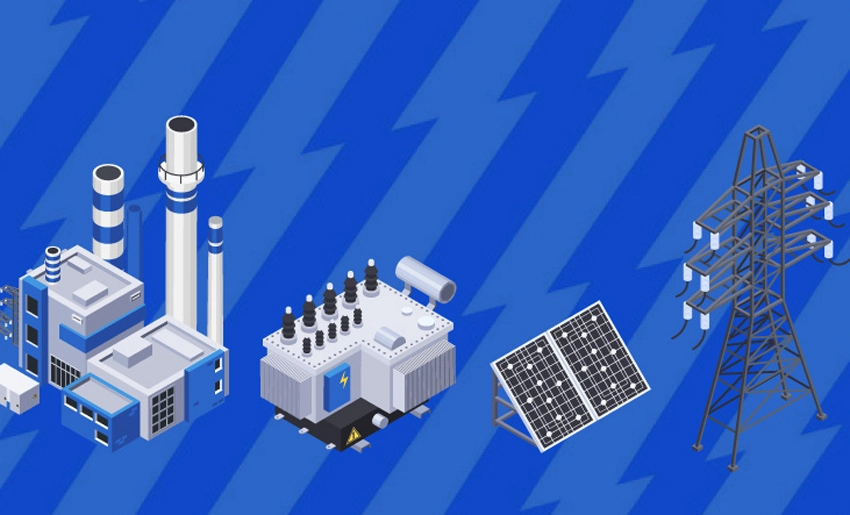
Every March 5th, since that international conference held in Austria in 1998, the world reflects on a concept that goes far beyond turning off a light bulb: energy efficiency. It is not, as is sometimes misinterpreted, about giving up comfort or sacrificing quality of life, but about optimizing resources. Diversifying sources, and, above all, becoming aware that the energy we waste today is a piece of the future we are stealing from the next generations.
Cuba is no stranger to this reality. On the contrary: perhaps due to the limitations it has historically faced. The issue of energy has become a daily concern for millions of Cubans. The prolonged blackouts suffered in homes, healthcare facilities, businesses, and shops are not a mere inconvenience; they are a profound symptom of a multidimensional crisis that affects the economy and tests the resilience of the people every day.
Every hour without electricity equates to lost production, spoiled food, interrupted studies, limited healthcare services, and daily life subjected to constant stress. Behind each frustrating blackout lie intertwined structural factors. A financial blockade that hinders access to technology and spare parts, and a complex recovery strategy. While progressing, has yet to fully reverse the negative effects on people’s lives.
At the end of 2025, the Minister of Energy and Mines, Vicente de la O Levy, acknowledged that the year had been extremely challenging. Marked by the most acute fuel shortage in recent memory. Although the National Electric System technically has over 3,200 MW of installed capacity. Approximately 1,000 MW of distributed generation remains offline due to a lack of fuel. The fundamental cause, in his own words, is financial.
But the outlook is not entirely bleak. In recent years, the country has taken significant steps to change course. The commitment to renewable energy sources has moved beyond mere rhetoric and become a policy with concrete goals. Last year, 2025, saw the addition of 1,000 MW of photovoltaic solar parks, distributed across more than thirty facilities already operational in several provinces.
International collaboration has been key to this progress. Countries like China and Vietnam have committed to donations and joint projects. Convinced that renewables are the path to Cuba’s energy independence. China, for example, donated solar systems for homes after Hurricane Melissa and has financed entire parks. In December, Vietnam laid the foundation stone for four 20 MW photovoltaic parks, which are expected to be completed in the coming months.
However, the real leap forward won’t come solely from technology. No matter how many solar panels we install, if we don’t achieve a profound cultural shift in how we conceive of and use energy, we’ll be swimming against the tide. Energy efficiency isn’t just a matter for engineers or government officials: it’s a habit that should permeate every home, every workplace, every school. Turning off lights that aren’t needed, unplugging equipment on standby, demanding that public spaces not waste electricity. These are small gestures, but multiplied by every Cuban, they can make a huge difference.
The minister emphasized that the energy transition requires time and the necessary participation of everyone. That’s why regulations have been issued requiring companies to source at least 50 percent of their energy from renewable sources within three years. Energy councils are already operating in provinces and municipalities to plan and control consumption.
In 2026, the outlook is for a slight improvement, but without triumphalism. The Economic Plan anticipates a decrease in power outages compared to 2025. Although the minister himself cautioned that zero blackouts will not be achieved, and that there is still a long way to go. But the financial deficit persists, and until it is resolved, dependence on imported fuels will remain an Achilles’ heel.
It’s not just about surviving blackouts or meeting generation targets. It’s about building a fairer, cleaner, and more sustainable energy model that makes us less vulnerable to external crises and more responsible toward the planet we inhabit. Because efficiency, properly understood, is not deprivation: it’s intelligence. And in these times, being smart with energy is, quite simply, essential.

- Energy Efficiency in Cuba: The Challenge of Doing More with Less - 6 de March de 2026
- Holguin Provincial Archive Hosts Exchange for International Women’s Day - 4 de March de 2026
- Céspedes: The Legacy of a Father - 27 de February de 2026