
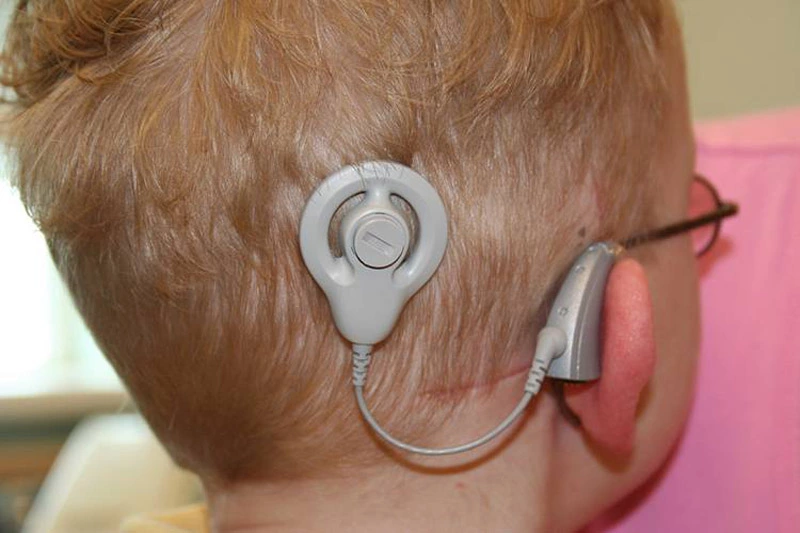
Cochlear implants have changed the lives of 29 residents of Holguin, who went from suffering from profound bilateral sensorineural hearing loss to regaining the ability to hear. While it is one of the most expensive procedures, with an average cost (excluding implantation) ranging from 18,000 to 20,000 euros and the surgery itself valued between 40,000 and 60,000 dollars. In Cuba it is performed completely free of charge for those in need.
The procedure involves the implantation of a state-of-the-art electronic device, responsible for replacing the function of the damaged inner ear. With over three decades of implementation, the National Cochlear Implant Program is a priority for the National Health System.
To ensure its success, an implant involves several steps. Among which pre- and post-operative auditory rehabilitation stands out. Ana Amelia Aragón Casals, a specialist in Special Education, has witnessed this process firsthand in Holguin, working with implanted patients at the Hearing Center.
How many people have received cochlear implants in this northeastern region?
“Currently, we have 29 implant recipients in the province of Holguin, including children and adults. We also have 11 children and two adults over the age of 18 who are candidates for cochlear implants.”
What is the auditory rehabilitation process like for these patients?
“This process begins when a child is diagnosed with profound bilateral sensorineural hearing loss. Usually, the family consults an otolaryngologist or a speech therapist because they become concerned that their child isn’t developing language or they realize they can’t hear. Then, auditory evoked potentials are performed at the Octavio de la Concepción de la Pedraja Pediatric Hospital, which identifies this profound hearing loss, and the child is referred to the Hearing Center.
There, we begin taking their medical history, conducting a series of tests, and refer them to the National Cochlear Implant Commission in Havana. This commission decides whether or not the child is a candidate for surgery. A CT scan must be performed to assess the likelihood of regaining hearing after the implant. As the loss is due to a malformation, making surgery impractical. These children begin rehabilitation even before surgery.”
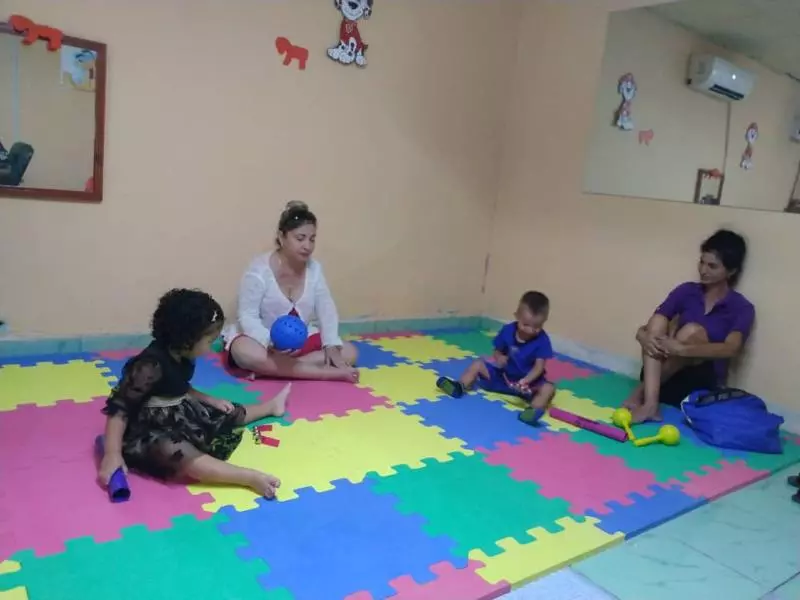
“I begin to treat them, rehabilitate them, and teach them to adapt to lipreading. When we speak to them, they look at our lips, begin to learn to make sounds, to hear vibrations, or feel them according to the child’s hearing loss. Through touch, they touch our hands, our throat, our face; they look at our face, our mouth, our lips, and we prepare them so that at a certain point they will begin to receive the auditory signal. From this point on, they begin to pay attention to people.”
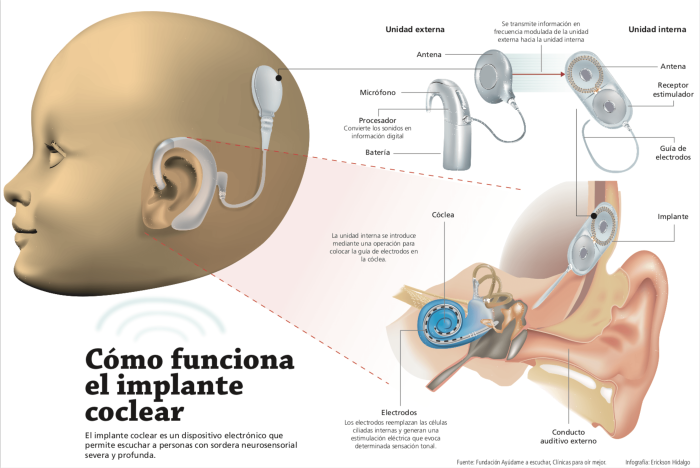
“Once contacted, they make several trips to Havana before undergoing surgery. Then we wait for the healing process, which takes 15 days to a month. Afterward, the implant is programmed, which we call the awakening, because that’s when the child begins to hear for the first time. The device is set to a very low volume so the child can begin to adapt without becoming distressed or getting a headache. They return to our center, and we begin rehabilitation, focused on training their hearing and preparing their brain to develop auditory memory.”
“During rehabilitation, we teach them different sounds from their environment: the sound of water, a door, their parents’ voices. We begin training them to respond to their name when we call it, to the sounds and names of animals, different syllables, hiatuses and diphthongs to gradually form words, and train their ear to respond to any sound we make.”
“We work by explaining to the teachers that this child should be seated at the front of the classroom, that they should speak to him closely, enunciate slowly, and that they shouldn’t seat him near a fan or air conditioner because the sounds from those devices interfere with the child’s hearing. This process is a triad that must function correctly for the child to progress: family, education, and health.”
“From our perspective, this rehabilitation must be daily. The child will begin to develop his hearing age from the first day his device is programmed. It’s a very slow process, requiring a lot of calm, love, and patience so that his brain gradually adapts to receiving the auditory stimulus, memorizes it, and can then reproduce it. Not everyone responds in the same way, nor do they speak at the same pace.
Even if a child with a cochlear implant begins to hear and then begins to speak, it doesn’t mean he is no longer deaf. This child will be
“From our perspective, this rehabilitation must be daily. The child will begin to have their auditory age from the first day their device is programmed. It’s a very slow process. Requiring a lot of calm, love, and patience so that the brain can gradually adapt to receiving the auditory stimulus, memorize it, and then reproduce it.
Not everyone responds in the same way, nor do they speak at the same pace. Even if a child with a cochlear implant begins to hear and then begins to speak, it doesn’t mean they are no longer deaf. This child will be deaf for life, but the implant will allow them to hear and learn spoken language.”
What impact does this procedure have on the quality of life of those who receive the implant?
“This treatment has a profound impact on anyone who receives it. Imagine living in a world of total silence and then beginning to hear. In the case of children born deaf, it takes them out of that world of total silence to begin a new life, to learn spoken language, to become independent. To be able to attend a mainstream school—it’s truly wonderful. It’s a program prioritized by our Revolution.”
“Imagine how impactful this treatment is for these people, whose disability ceases to be a limitation. From the moment they begin to hear through the cochlear implant, they can lead a normal life. It’s a first-world treatment, something marvelous.”
This is one of the most significant achievements of Cuban public health. Just meeting the beneficiaries is enough to understand how they experience the sensation of hearing their own voices and those of their loved ones. This program includes initial consultations, cognitive and language skills assessments, family counseling, and language rehabilitation. It comprehensively addresses hearing recovery and language development. Thanks to this program, it is possible to awaken to sound.

- Russia Schedules Launch of Reusable Space Rocket - 11 de April de 2026
- Promoting Learning with the Ludox Video Game Platform - 11 de April de 2026
- West Syndrome: Beyond Spasms - 11 de April de 2026