
The recent publication in the Official Gazette of Law No. 168, on Transparency and Access to Public Information, in January 2026. It marks a milestone in the improvement of our institutions. However, like any cutting-edge legal tool, its success will not be decreed in offices. Rather in its capacity to energize the relationship between institutions and the people, the true protagonists of our political system.
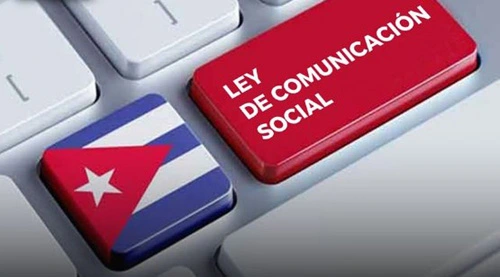
When the National Assembly approved this law in July 2024. It consolidated a legislative cycle consistent with the 2019 Constitution and the Law on Social Communication (Law 162/2023). The latter, in effect since the end of 2024, had already defined the path. Communication in Cuba cannot be a vertical or “media-centric” process. Also rather a framework where the organizational, the media-centric, and the community converge to serve the citizen.
Breaking down the wall of secrecy.
Law No. 168 strengthens an essential right: the right to request and receive truthful information from the State. For years, access to public data was often subject to subjectivity or the “goodwill” of the official in charge. Today, the landscape has changed. The law establishes clear deadlines—15 business days to respond. Most importantly, mechanisms for administrative and judicial appeals.
One of its greatest strengths is the breadth of its obligated entities. It is not limited to state structures. It extends to mass organizations, social organizations, and private entities that manage public funds. This is an explicit recognition that transparency must be the lens through which everything belonging to the nation is viewed.
The incorporation of the principle of proof of harm is vital. From this perspective. So confidentiality cannot be a refuge for inefficiency. If an institution denies information for reasons of security or public interest. It must rigorously substantiate the actual harm that its disclosure would cause. Invoking “national security” in a generic way is no longer a valid tactic to silence what is inconvenient.
As Ricardo Ronquillo Bello, president of the UPEC (Union of Cuban Journalists). He has pointed out the media now has a legal shield to demand information and revitalize the public agenda. However, the law is merely a “umbrella.” The real challenge is to dismantle the culture of secrecy that still survives in sectors of the bureaucracy.
The country’s Political Communication Strategy is clear: credibility, empathy, and resilience. But credibility is not inherited. It is earned through the daily practice of accountability. Transparency is, ultimately, a mechanism of popular control.
Moreover the law will fully enter into force in July 2026. These 180 days of preparation are critical. It is not enough to train public officials. Citizens must take ownership of the right, understand it, and exercise it with the responsibility that our society demands.
Transparency is not an end in itself, but rather the means to more efficient and responsive public administration. Every piece of data proactively published and every honest response to a citizen. It will be a firm step toward the Socialist State of Law that we have set out to consolidate.
By: Daimy Peña Guillén

- Saving Lives with Energy Sovereignty - 7 de April de 2026
- Minjus informs about the use of criminal records in Cuba and abroad - 6 de April de 2026
- Active Sedentary Lifestyle: A New Therapy Against Dementia - 6 de April de 2026