
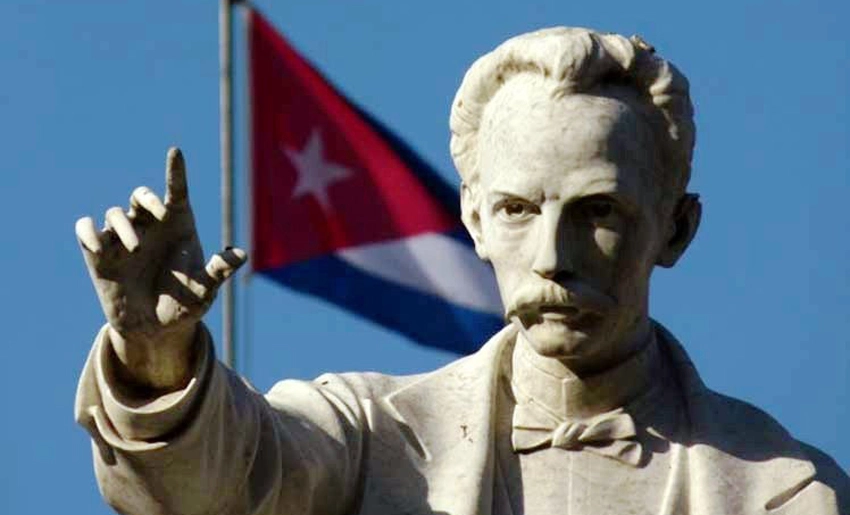
José Martí did not write to adorn libraries or for the comfortable rest of consciences.
He wrote with the urgency of one who knows that words can be both shelter and a machete. In his texts, the Homeland is not an abstract concept or an empty slogan: it is a mother. A mother who suffers, who demands, who calls for sacrifice without promising any pedestal.
Likewise, Martí’s conception transcends geographical limits by integrating the human and universal dimension of patriotism. When he expresses that “Homeland is humanity,” he expands the meaning of love for the land to a greater responsibility. The defense of human dignity as the foundation of every true nation. The land is loved, then, not as a possession, but as a common heritage that must be protected for future generations.
The Homeland is worthy of being defended not as an empty slogan, nor because a government profits at the expense of its land, but simply because it is a conscious act of dedication, justice, and sacrifice. “The homeland needs sacrifice. It is an altar, not a pedestal. It is to be served, but not used for personal gain.”
His prose, clear and passionate, combines tenderness and firmness. Martí knew how to denounce with precision, but he also knew how to caress with words. In every line, one perceives his concern for the future, for the humble, for the republic that did not yet exist and that was to be born “with all and for the good of all.” He did not write from resentment, but from a vigilant, critical, and profoundly human love.
A boy who became a man at an early age, with clarity about what he wanted for his land: not a Spanish Cuba, not a Cuba robbed of its freedom by another country, not a Cuba exploited by its leaders. Martí wanted a just, democratic, and vibrant Cuba.
“Homeland is humanity, it is that portion of humanity that we see most closely and into which we were born. “And it must not be permitted that, under the guise of the holy name, useless monarchies, bloated religions, or shameless and greedy politics be defended,” Martí wrote.
This love for the land is also founded on an ethical vision of the nation. Martí warns against the opportunistic use of the concept of Fatherland and affirms that only those who serve it with honesty and justice are legitimate. In his political and journalistic writings, he insists that “serving the Fatherland is the only way to be free.” Establishing an inseparable relationship between love, duty, and freedom.
Reading Martí today is to return to an ethical compass. His writings remind us that the Fatherland is not a trophy or an opportunistic discourse, but a shared responsibility of the people. It is a mother who educates and demands, who does not accept deception or indifference.
And in that demanding, radical, and pure love, Martí sowed a lesson that continues to resonate: the Homeland is loved by serving it and defended with the truth. She defined love of country as “the invincible hatred of those who oppress it, the eternal resentment of those who attack it.”
By: Arlenis Betancourt Yañez

- Holguin Railway Workers Maintain National Connectivity - 2 de April de 2026
- Protecting the Commons: An Ethical Issue in the Face of Theft - 2 de April de 2026
- Russia to Boost Relations with Cuba in All Areas - 2 de April de 2026