
The energy blockade imposed on Cuba by Washington has triggered a chain of consequences that severely impacts daily life. Faced with the announcement of transportation restrictions. A primal human instinct has kicked in for many families in Holguin: to procure and stockpile essential goods.
However, this instinctive reaction, understandable given the anxiety, is compounded and exacerbated by hoarding and reselling at exorbitant prices. This phenomenon occurs both in the informal market and through the import channels of micro, small, and medium-sized enterprises (MSMEs).
Consequently, the question that resonates among those who lack the resources to follow this trend is clear. What mechanisms exist to protect consumers and guarantee equitable access to food in times of extreme scarcity?
To understand this scenario, it is crucial to consider the severe oil shortage. Cuba produces only 40% of the fuel it consumes and is critically dependent on imports. Recent US measures hindering access to oil have exacerbated the situation. In response, the government has implemented a package of emergency measures. Including reducing the state workweek to four days, limiting fuel sales, and decreasing interprovincial transportation.
In Holguin, as in the rest of the country, this has resulted in a partial paralysis of economic activity and widespread uncertainty. Creating fertile ground for stockpiling, whether for self-sufficiency or profit.
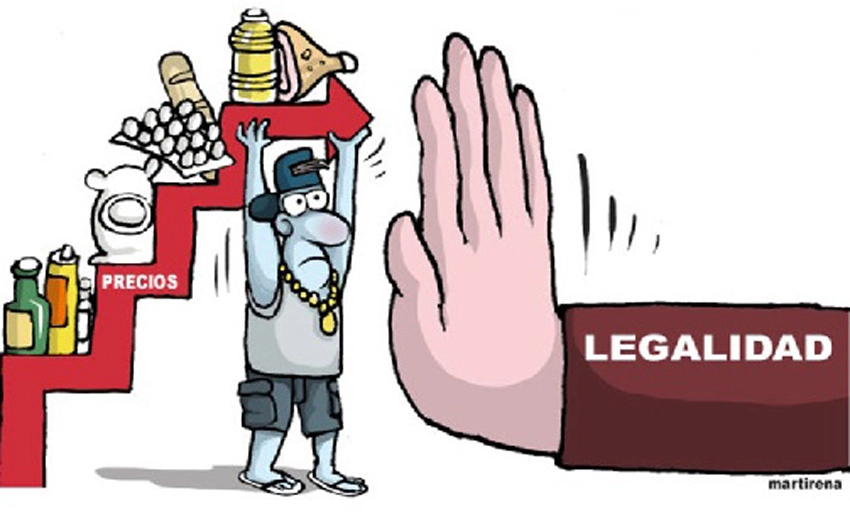
In this complex scenario, micro, small, and medium-sized enterprises (MSMEs)—economic actors that have emerged in recent years—have become key suppliers of products that are scarce in the state-run retail network. However, the Ministry of Finance and Prices has set maximum prices for six high-demand products (chicken, oil, powdered milk, etc.) sold by these businesses, also limiting their profit margin to 30%.
Far from solving the problem, this measure has had a perverse effect: regulated products have disappeared from formal store shelves and reappeared on the black market at much higher prices. For example, chicken that a micro, small, or medium-sized enterprise (MSME) could sell for 3,130 pesos ends up on the informal market and is resold on the street for 4,400 pesos.
Faced with this market distortion, the role of inspection and control authorities is enormously complex. Their mandate is twofold: on the one hand, they must monitor compliance with price regulations in stores selling goods in USD and by MSME. Although the effectiveness of this is questionable given the migration of products to the underground market. On the other hand, they must prosecute hoarding and illegal resale in the informal market. This latter task involves identifying those who buy large volumes to speculate, a difficult task amidst widespread panic buying.
However, these necessary actions to prevent abuses clash with an overwhelming economic reality. The hyperinflation of the Cuban peso, the fiscal deficit, and widespread shortages are far more powerful forces than any administrative control. Enforcing regulations to ensure products are sold at “unrealistic” prices (based on current costs) can simply lead to those products being taken off the market legally.
Beyond the figures and regulations, there are people’s lives at stake. It’s true that micro, small, and medium-sized enterprises (MSMEs) are expensive. But they are the only places to find food. When a family spends its savings on several liters of oil or kilos of flour, it’s not always for profit.
Often, it’s an act of desperation in the face of the certainty that tomorrow will be harder and more expensive. Differentiating this legitimate act of survival from hoarding for speculative purposes is the human dilemma at the heart of the crisis.
Ultimately, the situation in Holguin is a microcosm of the Cuban crossroads. Control measures, while well-intentioned from the perspective of protecting purchasing power, can exacerbate the problem if the root cause. So the severe energy crisis and the profound exchange rate and monetary distortion—is not addressed.
As long as there is no fuel to fuel the economy and a gaping hole exists between the official and real dollar exchange rates. The pressure to hoard and the temptation to speculate will persist. The solution, as the highest authorities have acknowledged. Cannot be solely based on restrictions and controls. But urgently requires productive solutions that increase the supply of goods.
Meanwhile, in the streets of Holguin, the daily struggle for sustenance continues. Demonstrating once again the resilience of the Cuban people. But also highlighting the limitations of an approach that combats the symptoms without being able to cure the underlying disease.
By: Daimy Peña Guillén

- Another Mexican Ship with Aid Arrives in Havana - 28 de March de 2026
- Vandalism, a Silent Enemy in Holguin - 28 de March de 2026
- Solar Kits Illuminate Communities in the Turquino Plan - 28 de March de 2026