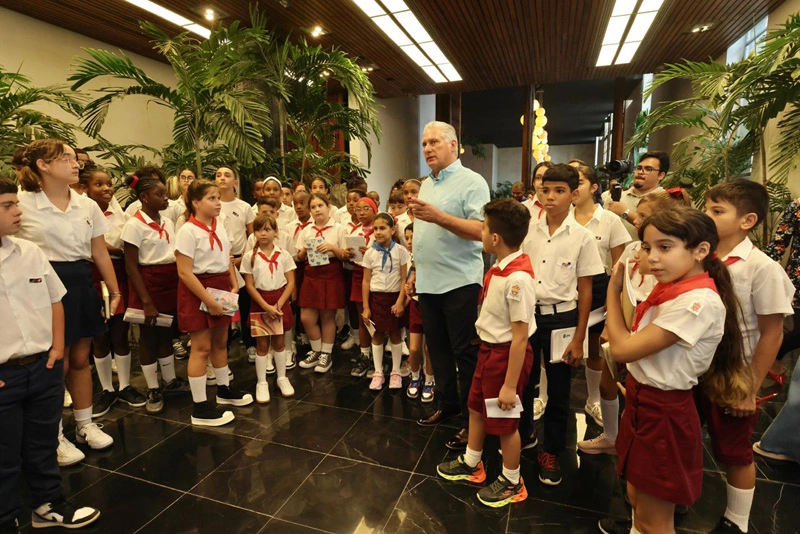
The recent entry into force of the Children, Adolescents, and Youth Code (Law 178/2025) marks a milestone in Cuba’s legislative history. This legal framework, which modernizes and unifies a scattered and outdated body of regulations, not only aligns with the 2019 Constitution and the country’s international commitments. But also aims to establish a radical paradigm: recognizing more than three million Cubans under the age of 30 not as objects of protection. Also full subjects of rights and key players in their own development.
The code, the result of an unprecedented public consultation process involving more than 825,000 children, adolescents, and young people. It exhibits significant structural strengths.
First, it establishes a Comprehensive Protection System that seeks to coordinate the actions of the State, families, schools, and communities. Moving beyond the paternalistic approach of the past. The creation of Commissions for Children, Adolescents, and Youth at all levels suggests an attempt to institutionalize participation and monitoring.
Second, its rights-based approach is broad and contemporary. It addresses everything from protection against violence in all spheres. Including, in a pioneering move, specific provisions against cyberbullying and digital risks—to the right to participate in decisions that affect them. This last point is perhaps the most revolutionary: it makes listening to new generations a legal obligation for institutions.
However, the true test for this ambitious project begins now. Cuban legislative history shows that the gap between written law and its effective implementation can be considerable. The successful implementation of the Code faces structural obstacles that are not resolved by its publication in the Official Gazette.
Also the current socioeconomic context is the first source of tension. A Code that promotes rights to recreation, culture, sports, and an adequate standard of living clashes with the material deficiencies of an economy in crisis. Guaranteeing “safe and protective environments” requires investment in infrastructure, staff training, and resources that are extremely limited.
Secondly, there is the challenge of cultural and institutional transformation. The Code demands a change in mindset among officials, teachers, healthcare professionals, and families.
Paternalism, top-down authoritarianism, and the suppression of children’s voices are deeply rooted in social and institutional practices. Eradicating them requires a massive, sustained, and well-directed training campaign, the scale and depth of which remain to be seen.
Finally, inter-institutional coordination—always a weakness in Cuban public administration—will be crucial. The Comprehensive Protection System will only function if the Ministries of Education, Health, Culture, the Interior, and mass organizations achieve fluid and streamlined coordination. With clear channels for reporting and swift response. The newly created Steering Committee will have the monumental task of orchestrating this symphony of actors.
The code’s viability will depend on several factors. Political commitment and resource allocation will be the first sign of seriousness. Will specific and sufficient budget allocations be designated? Will its implementation be prioritized on the government agenda above other urgent matters?
Another factor will be the capacity of civil society, including universities and social organizations, to exercise critical oversight. Independent monitoring, documenting progress and setbacks. It will be essential to prevent the code from becoming a dead letter. Moreover the main risk is that, faced with enormous daily difficulties, the code will become a mere declaration of good intentions. Applied formally and unevenly across the country.
The Code for Children, Adolescents, and Youth is undoubtedly the most advanced and progressive law of its kind in Cuban history. It provides a solid legal framework and a clear compass toward a more just and inclusive society for its younger generations. Its value as a tool for accountability and civic education is immense.
Caribbean Channel Report on the Code for Children, Adolescents, and Youth in Cuba
By: Daimy Peña Guillén

- Russia Explores Aid Options for Cuba - 21 de March de 2026
- Cuban President Reaffirms Defense of National Sovereignty Before Friends of the World - 21 de March de 2026
- Installation of Photovoltaic Systems Progresses in Health Institutions - 20 de March de 2026