
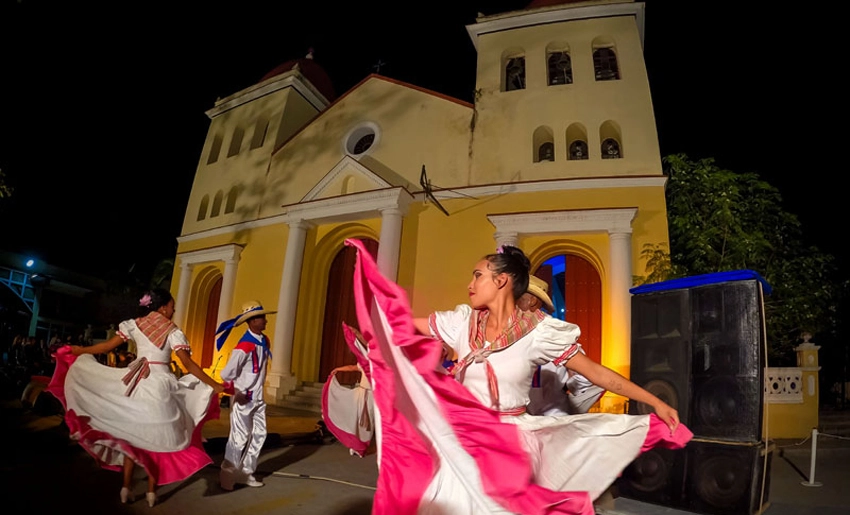
With a gala showcasing the territory’s traditions and roots. The people of Holguin celebrated the 274th anniversary of receiving the title of City and Government District on January 18th. This celebration was the centerpiece of the 43rd Culture Week.
In front of the San Isidoro Cathedral, in Major General Julio Grave de Peralta Park, attendees waited until midnight. At which point the reading of the municipal charter signed in 1752 was commemorated. The Municipal Directorate of Culture dedicated a space to honoring the individuals to whom this year’s main event is dedicated. Recognizing historian Mayra San Miguel, writer José Rafael Rojas Bez, and promoter Ricardo Ronda Chacón for their lifetime achievements.
Also the 50th anniversary of the Cuban News Agency’s Holguin bureau. Considered a school and vanguard of journalism in the region, was also celebrated. As was the 40th anniversary of the City Prize and Holguin Publishing House.
Moreover the event celebrated the pride and achievements of the city that gave birth to illustrious figures such as Delfín Pratts, National Literature Prize winner. Faustino Oramas “El Guayabero,” National Humor Prize winner. Raúl Camayd, founder of the Lyric Theater in the province. A toast was also raised to continue transmitting their legacy and honoring the history that precedes them.
The evening was accompanied by performances from the Provincial Concert Band, and under the artistic direction of Víctor Osorio. Some scenes from local history were commemorated through music and dance. Highlighting the blend of culture and traditions that shape the identity of its inhabitants. Also participating were soloists from the Rodrigo Pratts Lyric Theater, the Codanza dance company, La Campana, the troubadour Laynier Verdecia, and artists Yoyi Serra and Fermín López from the Palabras al Viento (Words to the Wind) storytelling company.
San Isidoro de Holguin was founded when Marshal Don Alonso de Arcos y Moreno officially recognized it. In compliance with the orders of King Ferdinand VI and following several petitions from the residents to the Spanish Crown. This settlement would cease to be a town and become a city.
With information from CNA

- Iran Announces Full Control of the Strait of Hormuz - 4 de March de 2026
- Prosecutor’s Office Charges Those Implicated in Attempted Infiltration of Cuba - 4 de March de 2026
- Tubal Páez: Taking the Risks - 4 de March de 2026