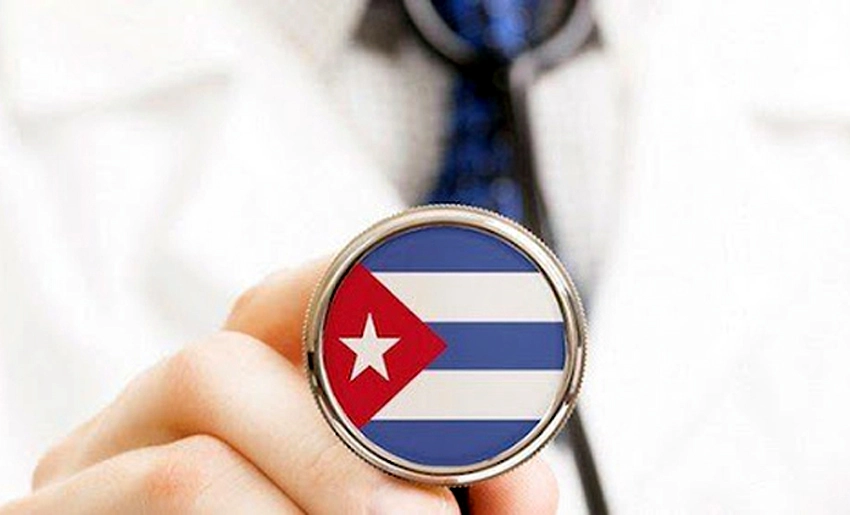
Cuban medical missions have always had a profoundly humanist character. “Healing without borders, without geopolitical interests or conditions, is the essence of our healthcare system.” Stated Dr. José Ángel Portal Miranda, Cuba’s Minister of Public Health. During the 5th International Convention “Cuba-Health 2025” at the Havana Convention Center.
Before thousands of delegates from 88 countries, the minister reaffirmed the island’s unwavering commitment to health as a universal human right. A founding principle of the Revolution that, for more than six decades. It has materialized in an army of white coats bringing comfort and hope to the most needy corners of the planet.
This colossal work of solidarity began in 1963 with a mission to Algeria. Since then, the international medical collaboration program has deployed more than 605,000 healthcare professionals in 165 nations. In 2022 alone, more than 22,000 Cuban workers. Representing 75% of the Cuban workforce abroad, provided services in 50 countries.
Moreover these missions constitute one of the world’s most extensive and enduring global health initiatives. During the COVID-19 pandemic, Cuba deployed nearly 1,500 additional professionals to more than 20 nations. Joining the approximately 30,000 already serving abroad.
While the support is concentrated in Latin America, the Caribbean, and Africa. It has also reached European nations such as Portugal and Italy. Programs like “Mais Médicos” (More Doctors) in Brazil. Where thousands of Cuban physicians served populations in remote areas until 2018. Demonstrate the impact and recognition of this collaboration.
This cooperation has also become a crucial source of foreign currency for the national economy, generating $4.9 billion in 2022. Host countries pay the Cuban state for these services. A significant portion of the revenue is reinvested in the National Health System (SNS).
Also this financing model allows Cuba to maintain universal free healthcare. Fund the training of new professionals in the country’s 24 medical schools. And develop the production of medicines and vaccines. Such as the domestically produced COVID-19 vaccines. It’s a virtuous cycle of external solidarity that strengthens domestic healthcare. Especially under the limitations of the economic, commercial, and financial blockade imposed by the United States. In which makes acquiring essential supplies more expensive.
Regarding the question of the impact of healthcare professionals leaving the system, the response to the pandemic offers a telling perspective. The Cuban National Health Service (SNS). With its more than 479,000 workers organized across three levels of care and centered on the family doctor. It ensured an effective and equitable response. Achieving one of the lowest mortality rates in the Americas.
The voluntary nature and humanitarian vocation of the Cuban medical professionals are pillars championed by the Cuban government. Minister Portal Miranda highlighted this “humanitarian and solidarity-based vocation that defines the work” of these professionals. Who sign contracts with salary increases and whose families receive support on the island.
However, this example of South-South cooperation unfolds amidst an intense smear campaign and external pressure. In February 2025, the United States government expanded visa restrictions. Against foreign officials, falsely accusing the program of “forced labor.”
Also this stance has generated firm and unanimous rejection from the countries of the Caribbean Community (CARICOM). For whom Cuban doctors are vital. Leaders like Barbados’ Prime Minister Mia Mottley have defended the collaboration. “We pay them the same as Barbadians. We repudiate and reject the idea (…) that we were involved in human trafficking.” Gaston Browne, Prime Minister of Antigua and Barbuda, warned that punitive US measures would “virtually dismantle” Caribbean health systems.
Cuba’s international medical missions represent a unique phenomenon. A model of solidarity that has saved millions of lives and strengthened developing health systems. For the Cuban people, they are a source of legitimate pride and an essential economic mechanism. For sustaining their own universal health system in the face of extreme adversity.
The future of this program, which has lasted more than 60 years, will depend on the continued demand from the people. Cuba’s resilience, and the evolution of external economic pressure. But as Health Minister Portal Miranda reaffirmed. For Cuba, medicine “will always be at the service of life.” The unanimous support of our sister nations demonstrates. Beyond the slander, the world recognizes and appreciates this truth.
By: Daimy Peña Guillén

- Holguin Hosts National Celebration of Children’s Center Anniversary - 10 de April de 2026
- Blockade Affects Care for High-Risk Pregnant Women in Holguin - 10 de April de 2026
- Cuba is not subject to the dictates of the United States, Díaz-Canel tells NBC News - 10 de April de 2026