
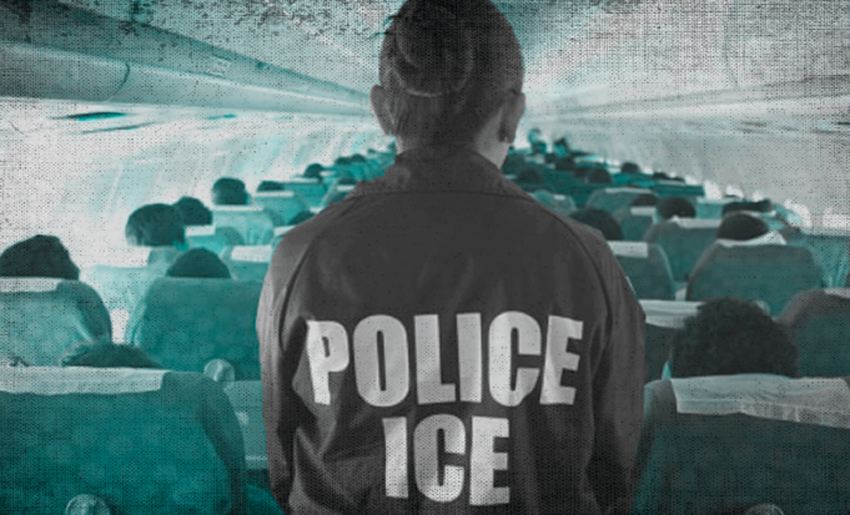
The Trump administration has executed a historic shift in U.S. immigration policy toward Cuba. For the first time, it has placed new Cuban migrants in a legal limbo that could lead to their deportation. This move breaks with more than six decades of exceptional and privileged treatment. Instrumentalized as a pillar of the political war against the Cuban Revolution.
The change reveals a cold recalibration of U.S. strategy and exposes the internal contradictions of the Cuban-American community. Now caught between its political rise and the xenophobia of the movement it helped empower.
The Breakdown of a Pillar of Anti-Cuban Policy
During the Cold War, the United States established a migration corridor for Cubans that was unique in the world:
- Cuban Adjustment Act (1966): Guaranteed permanent residency one year after setting foot on U.S. soil, regardless of the point of entry.
- “Wet Foot, Dry Foot” Policy: Encouraged irregular migration.
- Mass resettlement programs: With federal funding for their integration.
The objective was threefold:
- To drain human capital from Cuba.
- To create a counterrevolutionary social base in exile.
- To present the exodus as a rejection of socialism.
Between 2022 and 2023, more than 625,000 Cubans were processed under this framework, most requesting political asylum.
Trump’s executive order cancels this paradigm. Recent migrants see their residency applications paralyzed, risk ICE raids, and face deportation. Secretary of Homeland Security Kristi Noem includes them in her diatribe against the “damned countries that are flooding our nation.”
Why now? The three keys to the change:
- Change of strategy against Cuba: The objective is no longer to encourage departure. The new doctrine, inspired by sectors of the Cuban-American right. It seeks to retain the young workforce on the island to increase internal social tensions, making the crisis more explosive.
- Xenophobia as Trumpian political cohesion: Cuban immigration privileges were viable in a context of assimilation into a white middle class. The recent migratory Flow. However, is mostly working-class and mixed-race. Perceived by the Trump base as “despicable Latino riffraff.” The anti-immigrant logic admits no exceptions, even when it contradicts history.
- Political ascent and class disconnection: The Cuban-American elite (Rubio, Díaz-Balart, Cruz) reached its pinnacle of power in the Trump administration. Their rise was based on the political capital of the “historical exile.” But their interests are no longer aligned with those of recent migrants. They are spared xenophobia because of their class and power, not their origin.
Foreseeable Consequences: From Miami to Havana
In the United States:
- Massive Uncertainty: Hundreds of thousands of Cubans live in fear of deportation, canceled work permits, and bank accounts at risk.
- Possible Political and Electoral Realignment: Although the Cuban-American vote remains predominantly Republican. The climate of insecurity could affect local elections. The recent victory of Democrat Eileen Higgins as mayor of Miami, defeating a Trump candidate, is a sign of this.
- Crack in the Historical Consensus: The instrumental link is breaking down: Washington no longer rewards Cuban migration because it no longer needs to demonstrate the “failure” of socialism through exodus. It is enough to economically strangle the island.
In Cuba:
-
Challenge and Opportunity: The arrival of deportees accustomed to a different lifestyle and political system could increase internal discontent. Simultaneously, the demographic and labor hemorrhage is stemming.
-
Need for a new migration policy: The Cuban government is forced to design alternative paths for potential migrants. A plan for the reintegration of deportees, and strengthen ties with the diaspora, which is now less focused on returning.
Conclusion: The end of an instrument and the beginning of a new era
Trump’s measure is not a simple migration adjustment. It is the end of an era in which Cuban migration was a geopolitical weapon. It reveals that for Trumpian nationalism, the interests of “Deep America” and the fight against Latin American immigration ultimately outweigh the historical commitments of the Cold War.
For the Cuban-American community, it is a bitter irony. Also its political rise culminates just as the pillar of privilege that sustained its growth crumbles. For Cuba, it is the end of a cycle of migration warfare and the beginning of an even more complex challenge. Generating hope and a future within the island, in a context of crisis exacerbated by the blockade.
With information from Razones de Cuba

- Another Mexican Ship with Aid Arrives in Havana - 28 de March de 2026
- Vandalism, a Silent Enemy in Holguin - 28 de March de 2026
- Solar Kits Illuminate Communities in the Turquino Plan - 28 de March de 2026