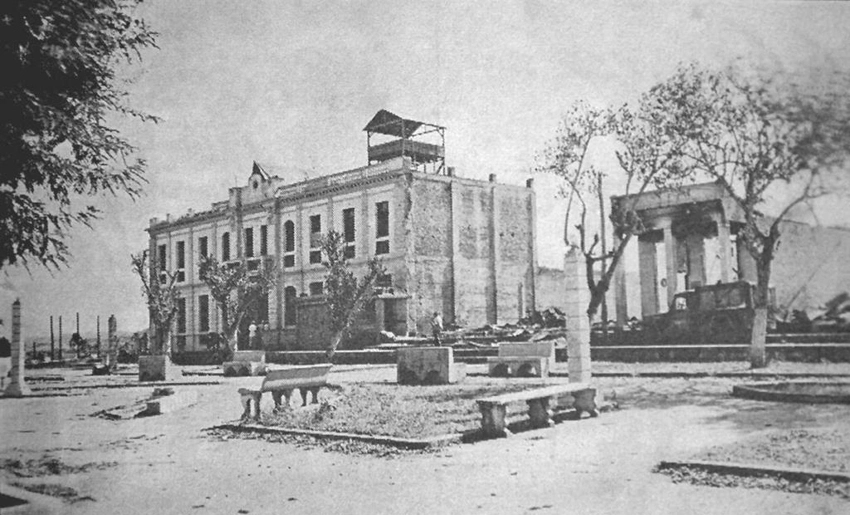
After 67 years the actions that liberated the towns of Sagua de Tanamo and Cayo Mambi, the memory of the town remains alive in the hearts of a people who honor themselves with the title of “Martyr City.”
A tense calm enveloped Sagua de Tanamo on the night of December 16th, 1958. It was the prelude to the final battle. This operation, one of the longest and most complex of the Second Eastern Front Frank País. Brought down a last bastion of tyranny in the northeast and paved the way for final victory.
The action was the result of a meticulous plan, conceived in the Sierra Maestra mountains and executed with precision. Under the command of then-Commander Raúl Castro Ruz, leader of the Second Front. Rebel troops began the siege of Sagua de Tanamo in early November 1958.
Moreover the objective was to immobilize and isolate the enemy forces. Entrenched in thirteen positions within the town, including the City Hall. To achieve this, fighters from Column 19 “José Tey”—commanded by Commander Belarmino Castilla Más (Aníbal)—and Column 17 “Abel Santamaría”—led by Commander Jorge Enrique Lussón Battle—established a tight blockade.
Futhermore the siege was so effective that life in the town became unbearable due to the extreme shortage of food and medicine. Outside the perimeter, the rebels not only harassed the enemy militarily. But also organized a nascent administration, gathering support in the liberated area.
After more than 40 days of siege, the order for the final assault arrived. On the night of December 16th, some 180 rebels launched a coordinated and simultaneous attack from multiple points. The offensive surprised an enemy garrison that was superior in number and weaponry. But already demoralized and isolated.
Also the fighting was intense, house by house. The rebels seized key positions: the power plant, a coffee processing plant, and the cemetery. Despite fierce resistance, the town center fell under their control by dawn on the 17th. The battle continued for a week, combining military action with a campaign of persuasion toward the besieged soldiers.
Who were urged by loudspeakers to lay down their arms. Finally, on December 24th, 1958, the Sagua de Tanamo garrison capitulated. Shortly afterward, Batista’s troops on Cayo Mambi suffered the same fate, consolidating a total strategic victory.
This triumph would not have been possible without the massive support of the civilian population. The peasants offered information, food, and shelter. The ultimate symbol of this popular ingenuity was the “Trojan Horse”: a truck that workers from Yamanigüey (Moa) armored with steel and equipped with a turret and machine gun. This “homemade tank,” now a preserved relic, was a formidable weapon representing the unbreakable bond between the Rebel Army and the people.
The victory had an immediate impact: it allowed for the capture of important supplies and paved the way for the liberation of Mayari on December 31st, marking the unstoppable advance of the Revolution.
Sixty-seven years later, that legacy is commemorated with pride. The towns of Sagua de Tanamo and Cayo Mambi honor their history with events, pilgrimages, and recognition of the new generations who embrace the patriotic commitment. The “Trojan Horse” continues to be a point of encounter and reflection.
Also the capture of Sagua de Tanamo and Cayo Mambi was more than a battle. It was a demonstration of strategy, courage, and popular unity under the leadership of the Second Eastern Front “Frank País.” This front was not only a military force, but a veritable government in arms that organized schools, hospitals, and the justice system in the liberated territory, foreshadowing the future of revolutionary Cuba.
By: Daimy Peña Guillén

- Cuba Defends Its Independence and Sovereignty Against Threats - 18 de March de 2026
- Holguin bets on energy sovereignty through renewable sources - 18 de March de 2026
- Venezuela Wins Its First World Baseball Classic - 18 de March de 2026